
Meet the Maker
Scott Dillingham — Museum-Exhibited Master Miniature Furniture Craftsman
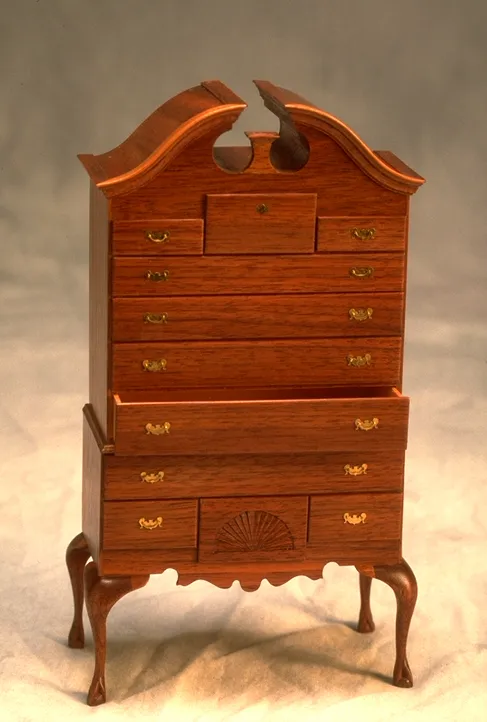
After decades of full-size woodworking, Scott discovered his true calling in the art of miniature furniture making. His work has been exhibited in museums and recognized by collectors worldwide. Working in his home workshop, he creates museum-quality 1/12 scale reproductions of period furniture — available for purchase and custom commission — using nothing but fine hardwoods, hand tools, and the same traditional techniques used by the original master cabinetmakers centuries ago.
The Philosophy
No Kits. No Shortcuts. No Compromise.
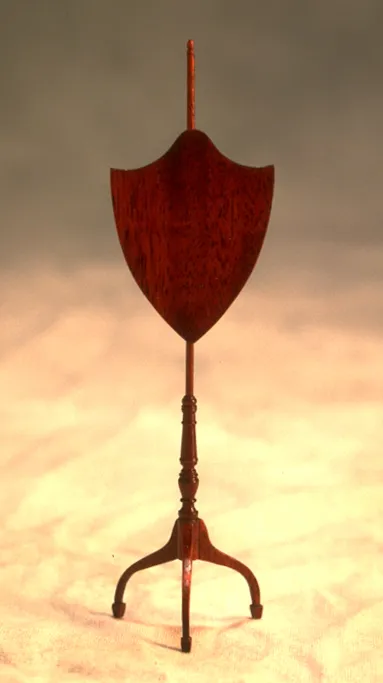
Every piece begins as a rough block of fine hardwood and is transformed entirely by hand. There are no CNC machines, no laser cutters, no pre-made kits. Just wood, hand tools, and patience.
Built the Way They Were Meant to Be
Each miniature uses the same traditional construction methods as the original full-size antiques — hand-cut dovetails, mortise and tenon joints, hand-carved details, and hand-applied finishes. The only difference is the scale.
What Drives the Craft
Every piece is guided by four principles that define what it means to create something truly extraordinary at miniature scale.
Authenticity
Every piece uses historically accurate construction methods. The same joinery and techniques used by the original master cabinetmakers.
Precision
Working at 1/12 scale demands extraordinary attention to detail. A fraction of a millimeter can mean the difference between perfection and failure.
Patience
Complex pieces take 200+ hours. There are no shortcuts to excellence. Every surface is sanded, every joint fitted, every detail considered.
Heritage
Preserving traditional woodworking techniques for future generations. Each miniature is a living record of centuries-old craftsmanship.
Why Handcrafted?
There is a world of difference between mass-produced miniatures and furniture built entirely by hand from solid hardwood.
Handcrafted
- Solid hardwood construction
- Hand-cut traditional joinery
- Working drawers and doors
- Museum-quality finish
- Historically accurate methods
- Heirloom that appreciates in value
Mass-Produced
- Resin, plastic, or laser-cut MDF
- Glued butt joints
- Fixed or non-functional details
- Factory paint or stain
- Machine-made shortcuts
- Disposable collectible
Further Reading
Explore the history and artistry behind miniature furniture making.
The History of Miniature Furniture
From ancient Egyptian tombs to modern collector galleries, trace the rich history of miniature furniture making.
Read ArticleMiniature Furniture as Fine Art
How miniature furniture transcends craft to become collectible fine art recognized by galleries worldwide.
Read ArticleThe Renaissance of Handcrafted Miniatures
Why handcrafted miniature furniture is experiencing a revival in the digital age.
Read Article