
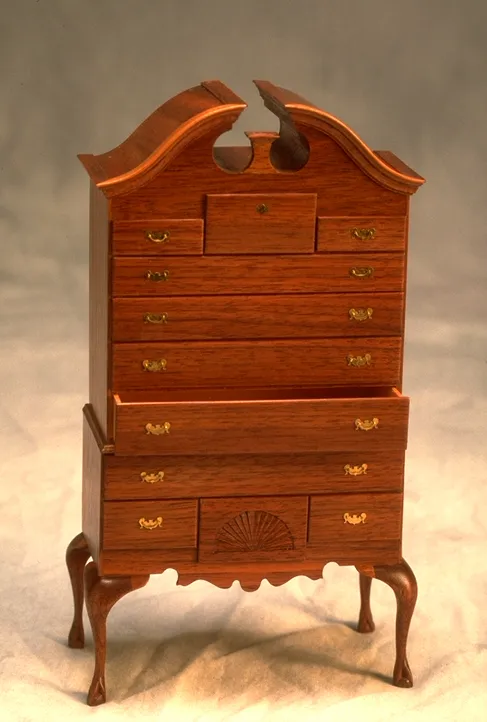
The Complete Guide to 1/12 Scale Miniature Furniture
Learn everything about 1/12 scale miniature furniture, from how measurements work to why this scale became the global standard for dollhouse collectors.
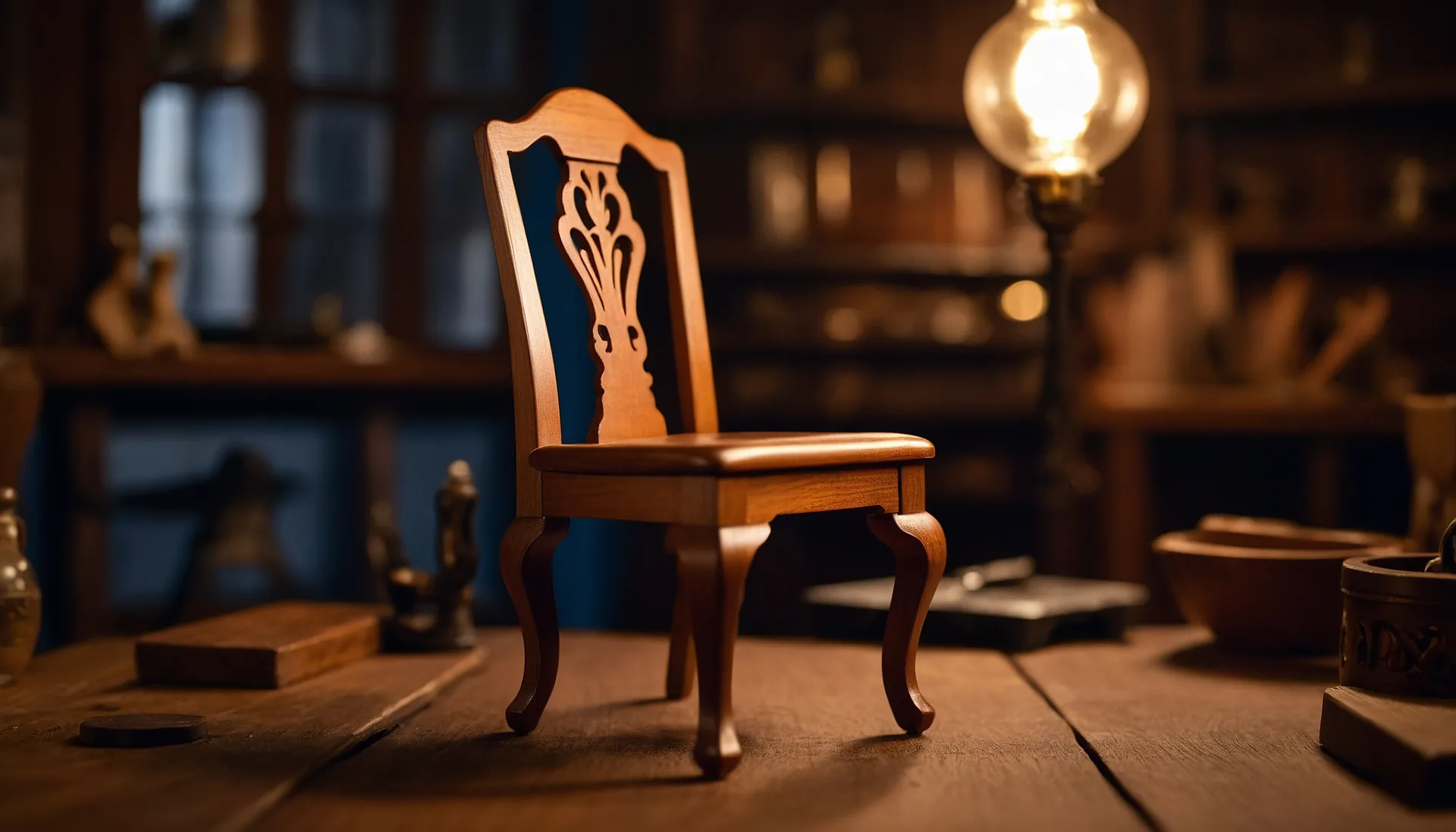
If you have ever picked up a tiny chair and marveled at its perfectly proportioned legs, its delicate spindles, or the subtle curve of its backrest, you have experienced the magic of 1/12 scale miniature furniture. As someone who has spent years at the bench crafting these pieces by hand, I can tell you that this scale is far more than a convenient ratio. It is a discipline, a tradition, and for many of us, an obsession.
In this guide I want to walk you through everything you need to know about 1/12 scale, whether you are a collector looking to understand what you are buying, or an aspiring maker ready to pick up your first set of miniature woodworking tools.
What Does 1/12 Scale Actually Mean?
At its simplest, 1/12 scale means that one inch in the miniature world equals one foot in the real world. A dining table that stands 30 inches tall in your kitchen becomes 2.5 inches tall on the miniature workbench. A six-foot bookcase shrinks to six inches.
The math is straightforward: take any real-world measurement in inches and divide by 12. A 36-inch-wide dresser becomes 3 inches wide. A 20-inch-deep desk becomes roughly 1.67 inches deep. In metric terms, 1/12 scale translates to approximately 1 inch equaling 2.54 centimeters for every 30.48 centimeters of real furniture.
This clean ratio is one reason the scale became so widely adopted. There is no awkward decimal to remember. One inch to one foot. It is elegant, and elegance matters when you are working at sizes where a fraction of an inch can throw off an entire piece.
A Brief History of the 1/12 Scale Standard
Miniature houses and furnishings have existed for thousands of years. Ancient Egyptian tombs contained small wooden models of furniture and household goods intended to accompany the deceased into the afterlife. During the 17th century, wealthy European families commissioned elaborate “baby houses” in the Netherlands and Germany, though these were display pieces for adults rather than toys for children.
The 1/12 scale did not become the dominant standard until the 20th century. Earlier miniatures varied widely in proportion, and many antique dollhouses feature rooms where the furniture does not match a consistent ratio. The push toward standardization came largely from collectors and artisan guilds in the 1960s and 1970s, particularly in the United States and United Kingdom. Organizations like the National Association of Miniature Enthusiasts helped establish 1/12 as the benchmark, and manufacturers followed.
Today, 1/12 scale is recognized worldwide as the default for dollhouse miniatures. When you walk into a miniatures show or browse an online shop, items listed without a specific scale notation are almost always 1/12. Other scales exist and serve important purposes, which I cover in my post on understanding dollhouse scales, but 1/12 remains the gold standard.
Why 1/12 Scale Became the Standard
Several factors made 1/12 the natural choice for miniature furniture makers and collectors alike.
Practical Size for Detail
At 1/12 scale, a standard room box measures roughly 12 to 16 inches across. That is large enough to accommodate genuine craftsmanship. Dovetail joints can be cut by hand. Drawers can slide open and closed. A turned table leg can show the same profile as its full-size counterpart. Go much smaller and you start losing the ability to replicate real joinery. Go much larger and the finished rooms take up considerable space.
Manageable Material Requirements
Working at 1/12 scale means a single board foot of good hardwood can yield dozens of furniture pieces. Exotic woods like boxwood or holly, which would be prohibitively expensive for full-size furniture, become perfectly affordable at this scale. I discuss material selection at length in my guide on choosing wood for miniature furniture.
Availability and Community
Because 1/12 has been the standard for decades, the supporting ecosystem is enormous. You can buy commercially produced accessories, wallpapers, flooring, lighting kits, and hardware all designed for this scale. When you build or collect at 1/12, everything works together.
How Measurements Work in Practice
When I sit down to create a new piece, the first step is always research. I find measured drawings or photographs of the full-size original, then apply the 1/12 conversion. But here is something that surprises many beginners: you cannot simply divide every dimension by 12 and call it done.
The Problem of Visual Proportion
Human perception does not scale linearly. A tabletop edge that is one inch thick on a full-size table converts to 1/12 of an inch, roughly 5/64 inch, in miniature. At that thickness, the eye reads it as too heavy. Experienced miniaturists learn to shave a small amount off edges and moldings to maintain the visual impression of lightness that the full-size piece conveys. I go into this process in detail in my post about scaling down furniture plans.
Working With Fractions of Inches
At 1/12 scale, tolerances shrink dramatically. A gap of 1/64 inch between a drawer and its frame would be the equivalent of a quarter-inch gap on a real dresser. That is noticeable and unacceptable. This is why miniature furniture making demands sharp tools, steady hands, and good magnification. Every cut matters.
What Makes Miniature Furniture Challenging
I sometimes hear people assume that making smaller furniture must be easier because there is less material to work. In reality, the opposite is true. Miniature woodworking compresses every challenge of full-size cabinetmaking into a space where mistakes cannot be hidden.
Grain Scale
One of the biggest hurdles is wood grain. A piece of oak that looks beautiful on a full-size dining table will appear coarse and oversized at 1/12 scale. The grain pattern screams that something is wrong. Choosing fine-grained species like cherry, maple, or boxwood is essential. The grain needs to look proportional to the piece it is part of.
Tool Control
Cutting a tenon that is 1/8 inch long and 1/16 inch wide requires a level of tool control that takes years to develop. Standard woodworking tools are too large and too coarse. Specialized micro chisels, jeweler’s saws, and precision marking gauges become necessary. You can read about my recommended toolkit in the essential tools guide.
Finishing
Applying a finish to a tiny piece introduces its own set of problems. A single coat of stain that is slightly too thick can obscure carved details. Brush strokes that would be invisible on a full-size table become glaring imperfections on a miniature one. Many miniaturists, myself included, turn to techniques like French polishing because it allows incredibly thin, controlled layers of finish.
Assembly
Gluing parts together when those parts are the size of matchsticks requires patience and ingenuity. Standard clamps are too large. Rubber bands, clothespins, and custom-made micro clamps become essential workshop companions. Dry-fitting every joint before committing to glue is not optional at this scale. It is survival.
Examples of 1/12 Scale Pieces
To give you a sense of what is achievable at this scale, here are the approximate dimensions of common furniture pieces.
- Dining chair: Seat height of roughly 1.5 inches, overall height around 3 inches
- Queen bed: About 5 inches wide by 7 inches long
- Grandfather clock: Approximately 6.5 inches tall
- Writing desk: Around 2.5 inches tall, 3.5 inches wide
- Bookcase: Roughly 5 to 6 inches tall depending on the style
Each of these pieces, when crafted with care, contains the same structural elements as its full-size inspiration. The drawers in a miniature Chippendale desk slide on runners. The doors on a miniature armoire swing on tiny brass hinges. The legs on a Queen Anne chair have the same cabriole curve. The difference is that all of this happens in the palm of your hand.
Getting Started With 1/12 Scale
If this guide has sparked your interest in working at 1/12 scale, I would encourage you to start by studying real furniture. Visit antique shops, study museum collections online, and pay attention to the proportions and construction details of the pieces that catch your eye. Understanding full-size furniture is the foundation of creating convincing miniatures.
When you are ready to pick up tools, my beginner’s guide to miniature woodworking will walk you through the first steps. And if you want to see examples of what is possible at this scale, take a look at my gallery where I showcase pieces from my own workshop.
The world of 1/12 scale miniature furniture is endlessly rewarding. Every piece is a puzzle, every project teaches something new, and the satisfaction of holding a finished creation that captures the spirit of a full-size original never gets old. Welcome to the craft.
Continue Your Journey
Related Articles
Dollhouse Decorating with Handcrafted Furniture
Learn expert dollhouse decorating tips using handcrafted miniature furniture. Create cohesive room settings with period-accurate pieces and realistic details.
How to Start a Miniature Furniture Collection
Learn how to start a miniature furniture collection with this expert guide covering quality assessment, theme building, budgeting, and display tips.

Displaying and Protecting Miniature Furniture Collections
Expert guide to displaying and protecting miniature furniture collections. Covers UV protection, humidity control, display cases, lighting, and insurance tips.