
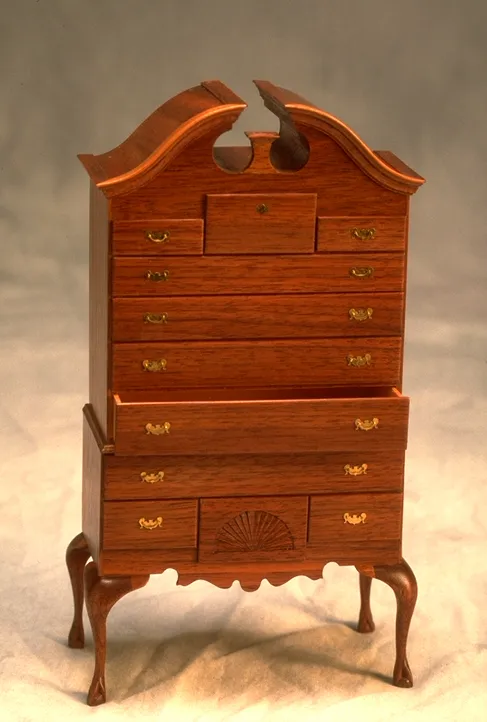
Understanding Dollhouse Scales: 1:12, 1:24, and 1:48
A comprehensive guide to dollhouse scales including 1:12, 1:24, and 1:48. Learn the differences, pros and cons, and which scale is right for your project.
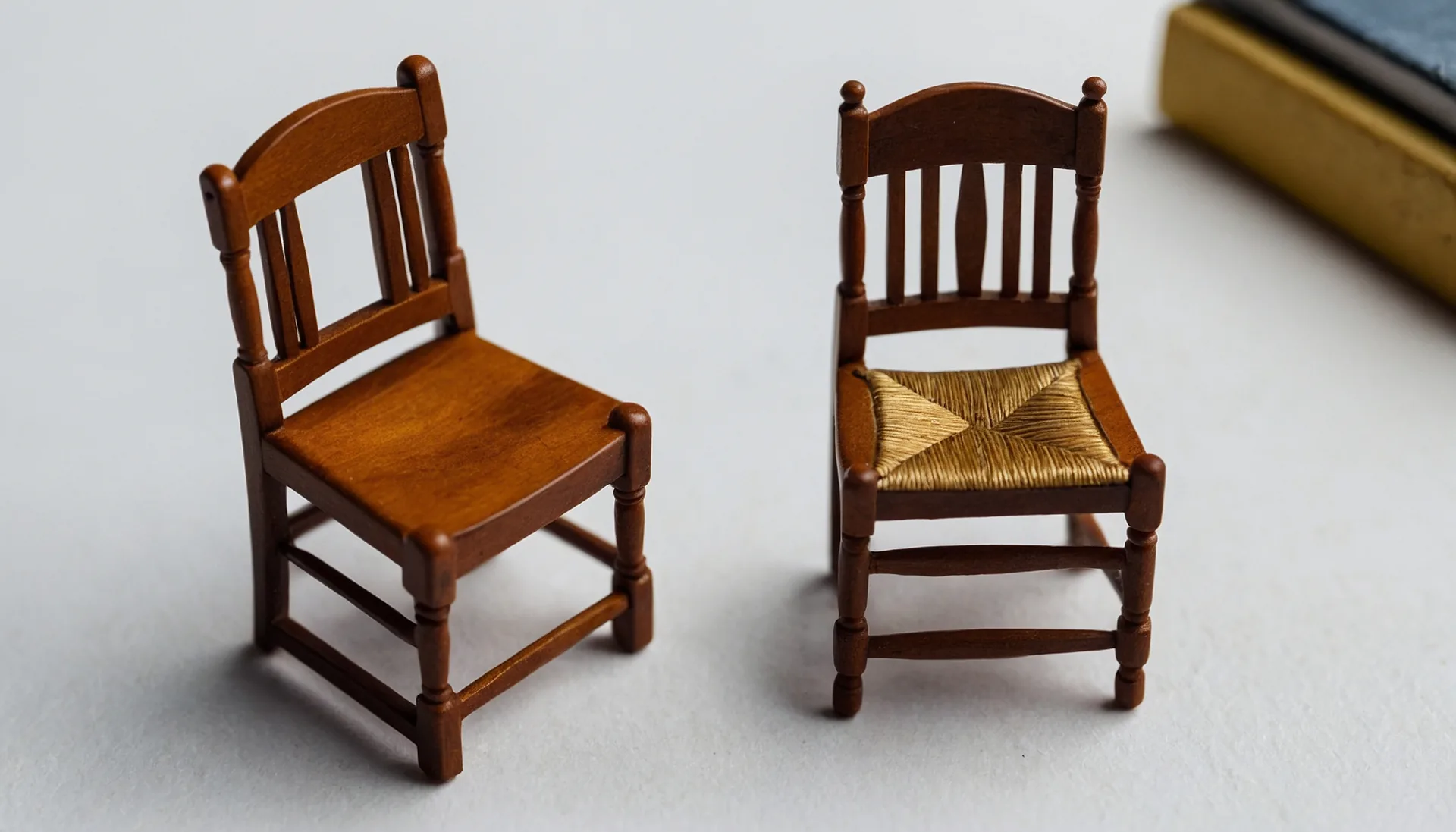
One of the first questions every new miniature enthusiast asks is about scale. Walk into a miniatures show and you will see pieces in several different sizes, each labeled with a ratio that might seem cryptic at first glance. Understanding these dollhouse scales is fundamental to collecting, building, and displaying miniatures, and getting them mixed up can lead to expensive mistakes.
I work primarily in 1/12 scale, but over the years I have built pieces at other scales as well. Each has its own appeal, its own limitations, and its own community of passionate devotees. Let me walk you through the major scales and help you figure out which one fits your goals.
The Three Major Dollhouse Scales
While niche scales exist, three ratios dominate the miniatures world. Everything else is a variation or specialty application of these three.
1:12 Scale (One Inch Scale)
In 1:12 scale, one inch represents one foot. This is the most popular and widely available scale worldwide. A standard interior door measures about 6.75 inches tall. A dining chair sits roughly 3 inches high. A full room box typically measures 12 to 18 inches across.
Advantages of 1:12 Scale
- Largest selection of commercially available accessories, hardware, and materials
- Big enough to accommodate real joinery techniques like dovetails and mortise and tenon joints
- Sufficient size for intricate detailing, carving, and turned elements
- The established global standard with the largest collector and maker community
- Most miniature shows and competitions are organized around this scale
Considerations
- Finished dollhouses can be large and heavy, requiring significant display space
- Material costs are higher than smaller scales simply because each piece uses more wood
- Storage of works in progress takes up more bench space
I have written extensively about working at this scale in my complete guide to 1/12 scale miniature furniture. If this is the scale that interests you, that post covers everything from measurements to history.
1:24 Scale (Half Inch Scale)
In 1:24 scale, half an inch represents one foot. Everything is exactly half the size of 1:12 scale. That same interior door drops to about 3.375 inches tall. A dining chair stands roughly 1.5 inches high.
Advantages of 1:24 Scale
- Dollhouses and room boxes are much more compact, fitting easily on a shelf or tabletop
- Less material needed per piece, making exotic woods even more affordable
- Entire multi-room houses can be displayed in the space that a single 1:12 room occupies
- Growing community and improving availability of accessories
Considerations
- Traditional joinery becomes extremely difficult at this size. Most joints rely on precision gluing rather than mechanical interlocking
- Fine details like drawer handles and hinges are very small and can be fragile
- Fewer commercially available accessories compared to 1:12
- Requires excellent magnification and very steady hands
- Finishing is more challenging because even thin coats of stain or varnish can obscure tiny details
1:48 Scale (Quarter Inch Scale)
In 1:48 scale, a quarter inch represents one foot. This is the smallest of the commonly used scales. An interior door stands about 1.7 inches tall. A dining chair is less than an inch high.
Advantages of 1:48 Scale
- Extremely compact finished pieces. An entire Victorian mansion can fit on a bookshelf
- Ideal for dioramas and scene-setting where the overall composition matters more than individual furniture details
- Very low material consumption
- Allows impressive architectural scope in limited display space
Considerations
- Individual furniture pieces are very small and extremely delicate
- Functional joinery is essentially impossible. Construction relies entirely on adhesive
- Detail work requires specialized tools and high-powered magnification
- Very limited selection of commercial accessories
- Not well suited for showcasing fine woodworking craftsmanship
- Handling finished pieces without damage requires great care
How to Measure and Verify Scale
Knowing the ratios is one thing. Being able to verify that a piece is actually the scale it claims to be is a practical skill every collector and maker needs.
The Quick Conversion Method
For any scale, the formula is the same. Take the real-world dimension and divide by the scale factor.
- 1:12: Real dimension in inches divided by 12
- 1:24: Real dimension in inches divided by 24
- 1:48: Real dimension in inches divided by 48
For example, a standard dining table height of 30 inches becomes:
- 1:12: 2.5 inches
- 1:24: 1.25 inches
- 1:48: 0.625 inches (just over half an inch)
Using Reference Objects
The fastest way to check scale at a show or when buying online is to compare against known reference objects. A 1:12 scale standard door should be approximately 6.75 inches tall. If the piece you are looking at has doors that are 3.375 inches, it is 1:24. If they are about 1.7 inches, it is 1:48.
Standard seat heights are another reliable checkpoint. An 18-inch real-world chair seat becomes 1.5 inches at 1:12, 0.75 inches at 1:24, and 0.375 inches at 1:48.
Avoiding Scale Mixing Disasters
One of the most common mistakes collectors make is accidentally mixing scales in a single display. A 1:24 scale chair placed next to a 1:12 scale table looks immediately wrong. The proportions clash in a way that the human eye detects instantly, even if you cannot articulate exactly what is off.
Before purchasing any miniature, verify its scale. Do not rely solely on the seller’s label. Measure the piece against known reference dimensions. I have seen mislabeled items at shows more often than I would like.
Which Scale Is Right for You?
The answer depends on what you want to achieve with your miniatures. Here are some scenarios to help you decide.
Choose 1:12 If You Value Craftsmanship
If your primary interest is in fine woodworking, authentic joinery, and showcasing the skills of the maker, 1:12 scale is the clear choice. It is the only common scale where you can realistically cut dovetails, turn legs on a lathe, and build functioning drawers. My post on miniature joinery techniques demonstrates what is achievable at this scale.
If you are a maker looking to develop your skills, 1:12 gives you room to grow. You can start with simple butt-jointed pieces and eventually progress to complex period reproductions with hand-cut joints and carved details.
Choose 1:24 If Space Is Limited
If you live in a small apartment or want to display an entire house rather than a single room, 1:24 scale makes practical sense. You can build or collect a fully furnished multi-story dollhouse that fits on a standard bookshelf. The trade-off is reduced detail fidelity, but many talented makers produce beautiful work at this scale.
Choose 1:48 for Architectural Dioramas
If your interest leans more toward architecture, scene composition, and storytelling than individual furniture details, 1:48 scale opens up fascinating possibilities. You can recreate an entire street scene, a shop interior with an exterior view, or a cross-section of a building showing multiple rooms. The furniture serves the scene rather than being the focal point.
Consider Multiple Scales
Many experienced miniaturists work in or collect across multiple scales for different purposes. I know collectors who have a detailed 1:12 scale room box showcasing prized furniture pieces, alongside a complete 1:48 scale Victorian house that demonstrates their interest in architecture. There is no rule that says you must pick one and stick with it.
Less Common Scales Worth Knowing
Beyond the big three, a few other scales appear in the miniatures world.
1:6 Scale (Playscale)
This is the scale of fashion dolls and action figures. At two inches per foot, these are large miniatures that allow extreme detail but require considerable display space. Not typically used for traditional dollhouse work, but some furniture makers create pieces at this scale for doll collectors.
1:16 Scale
Occasionally used in Europe, this scale falls between 1:12 and 1:24. It has a small but dedicated following, primarily in Germany and Scandinavia. Commercial availability is limited outside these regions.
1:144 Scale (Dollhouse for a Dollhouse)
This micro scale is used to create tiny dollhouses that sit inside 1:12 scale dollhouses. A full house at 1:144 fits in the palm of your hand. At this scale, individual furniture pieces are barely recognizable as furniture. It is more of a novelty than a serious crafting scale, but it is a charming concept.
My Recommendation for Beginners
If you are just getting started, I strongly recommend beginning with 1:12 scale. The learning resources are most abundant, the community is most active, and the scale is forgiving enough to let you develop skills without requiring superhuman dexterity from day one.
Once you are comfortable with the fundamentals of miniature woodworking, you can explore other scales with a solid foundation of knowledge and technique. My beginner’s guide is written with 1:12 scale in mind and will give you a structured path into the craft.
Whatever scale you choose, the important thing is to start. Visit my gallery to see what is possible, pick up some basic tools, and make your first piece. The scale is just a number. The joy of creating something small and beautiful is universal.
Continue Your Journey
Related Articles
The Complete Guide to 1/12 Scale Miniature Furniture
Learn everything about 1/12 scale miniature furniture, from how measurements work to why this scale became the global standard for dollhouse collectors.
How to Scale Down Furniture Plans to 1/12 Scale
Step-by-step guide to converting full-size furniture plans to 1/12 scale miniatures. Learn the math, proportional adjustments, and grain scale tricks.