
Miniature Furniture as Fine Art: The Case for Collecting
Explore why collectible miniature furniture belongs in the fine art world. From gallery exhibitions to museum collections, discover miniatures as true art.
Is a tiny handcrafted chair a piece of furniture, or is it a work of art? This question has followed miniature furniture for centuries, and I believe the answer is increasingly clear: the finest miniature furniture is both. It is functional in the sense that every drawer opens and every door swings, but it is art in every sense that matters. It demands extraordinary skill, conveys beauty, expresses the maker’s vision, and rewards sustained contemplation. In this post, I want to make the case for miniature furniture as fine art and explore what that means for collectors.
The Craftsmanship Argument
The foundation of any argument for miniature furniture as art begins with the sheer level of skill required to create it. Building fine furniture at 1/12 scale requires every technique used in full-size furniture making, but with tolerances measured in fractions of an inch. There is nowhere to hide a flaw. Every joint, every surface, every carved detail is exposed to close scrutiny.
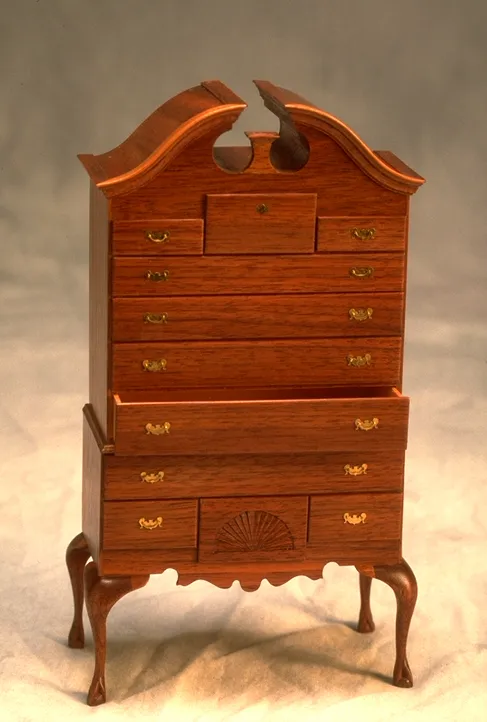
Consider what goes into a single piece from my workshop. A Queen Anne highboy in miniature requires hand-cut cabriole legs, carved shell ornaments, hand-turned finials, dovetailed drawers, and a meticulously applied finish. The cabriole legs alone demand shaping, carving, and sanding a piece of cherry no thicker than a pencil into a graceful curve with a pad foot. Each shell is carved with tools I grind myself, working under magnification to achieve detail invisible to the naked eye.
This level of craftsmanship demands years of practice, deep knowledge of materials and tools, and the kind of patience that borders on meditation. It is, by any reasonable definition, mastery of an art form.
Art or Craft? A False Distinction
The question of whether miniature furniture is art or craft reveals more about our cultural biases than about the objects themselves. The distinction between “fine art” and “decorative art” or “craft” has always been somewhat arbitrary, and it has shifted throughout history.
In the Renaissance, furniture makers were recognized as artists. The great ebenistes of eighteenth-century France signed their work and were celebrated in court circles. It was only in the modern era that a hierarchy emerged placing painting and sculpture above furniture, ceramics, textiles, and metalwork.
This hierarchy is crumbling. Contemporary art institutions increasingly recognize the artistry in objects that are also functional. Major museums collect and exhibit fine furniture alongside painting and sculpture. The same principle applies to miniature furniture: when an object is made with extraordinary skill, embodies aesthetic beauty, and represents the creative vision of its maker, it is art.
Miniature Furniture in Galleries and Institutions
The art world’s acceptance of miniature furniture is not theoretical. Fine miniature furniture has been exhibited in galleries and collected by major institutions for decades.
Institutional Collections
The Smithsonian Institution in Washington, D.C. holds miniature furniture in its collections, recognizing it as a significant expression of American craftsmanship. The Victoria and Albert Museum in London, one of the world’s premier museums of decorative art, has collected miniature furniture for over a century. The Art Institute of Chicago’s Thorne Miniature Rooms are among the most visited exhibits in the entire museum, demonstrating the broad public appeal of miniature craftsmanship. I discuss these collections and their historical context in my post on the history of miniature furniture.
Gallery Exhibitions
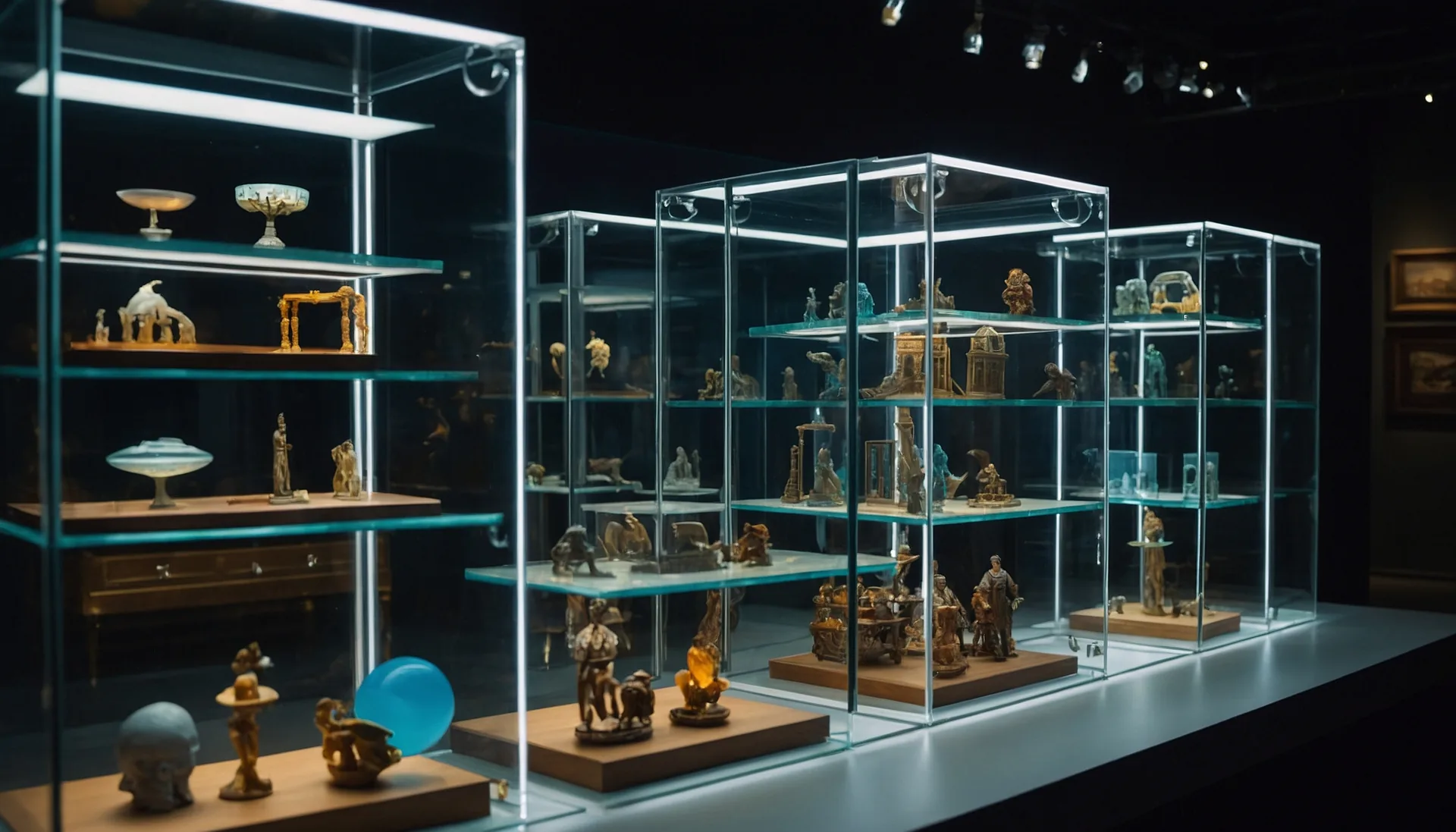
Independent galleries specializing in miniature art have emerged in several major cities, and established decorative arts galleries increasingly include miniature furniture in their exhibitions. These exhibitions present miniature furniture in the same context as other collectible art forms, with proper lighting, gallery notes, and curatorial commentary. This presentation reinforces what collectors have always known: these pieces deserve the same respect and attention given to any other art form.
Juried Competitions
The miniature world has a robust tradition of juried exhibitions where work is evaluated by panels of experienced makers, curators, and collectors. These competitions serve a similar function to juried fine art exhibitions, identifying and celebrating excellence and helping to establish makers’ reputations. Winning a major juried competition is the miniature equivalent of receiving an important gallery exhibition, and it adds significantly to a piece’s provenance and value.
Comparison to Other Collectible Art Forms
Miniature furniture holds up well when compared to other recognized collectible art forms.
Netsuke and Small Sculpture
Japanese netsuke, the tiny carved toggles used to fasten items to a kimono sash, are widely collected as fine art. The finest netsuke sell for tens of thousands of dollars at auction and are displayed in major museums worldwide. Like miniature furniture, netsuke demand extraordinary carving skill and artistic vision at very small scale. If netsuke is art, then certainly a meticulously crafted miniature secretary desk with thirty working drawers and hand-carved shell ornaments belongs in the same category.
Scrimshaw and Maritime Art
Scrimshaw, the art of engraving on whale bone and ivory, is recognized as a significant American art form and collected by major institutions. Like miniature furniture, scrimshaw represents painstaking handwork in challenging materials, and its appeal lies in the combination of technical mastery and artistic expression.
Turned Wood Art
Studio woodturning has been accepted as fine art for several decades, with pieces exhibited in major galleries and museums. Turned wood bowls and vessels share many qualities with miniature furniture: mastery of material, understanding of form, and the visible evidence of handwork. Yet miniature furniture demands additional skills, including joinery, carving, and finishing, that make it arguably more complex as a craft.
The Maker as Artist
Every piece of fine miniature furniture embodies its maker’s artistic vision. Even when reproducing historical designs, the maker makes hundreds of decisions that shape the final piece. Which piece of wood to use. How to interpret the original’s proportions at reduced scale. How much patina to apply. How to handle grain direction at critical visual points. These decisions are artistic choices, and they distinguish one maker’s work from another’s.
Over the course of a career, a maker develops a recognizable style, a body of work that can be studied and appreciated as a whole. Collectors learn to identify individual makers by their characteristic approach to form, finish, and detail, just as art collectors learn to identify painters by their brushwork and palette.
This is why maker attribution matters so much in miniature furniture collecting. A piece’s value is intimately connected to the maker’s identity, reputation, and place in the craft’s history. I discuss the financial implications of this in my post on the investment value of artisan miniature furniture.
Collecting Miniature Furniture as Art
If you approach miniature furniture collecting as art collecting, several principles follow naturally.
Develop Your Eye
Spend time looking at work from many different makers. Visit exhibitions and shows. Study museum collections. Learn to see the differences between competent work and exceptional work. This education is itself rewarding, and it will guide you toward the best pieces.
Collect What Moves You
The most satisfying art collections are built on genuine passion. Buy pieces that speak to you, that you want to live with, that you find yourself returning to look at again and again. These are the pieces that will also hold their value best, because your response to quality and beauty is usually shared by other informed collectors.
Build Relationships with Makers
The relationship between collector and maker is one of the unique pleasures of miniature furniture collecting. Unlike most art forms, miniature furniture makers are generally accessible and happy to discuss their work, their process, and their plans. This relationship enriches the collecting experience and gives you access to work before it reaches the broader market.
Document and Preserve
Treat your collection with the respect you would give any fine art collection. Proper display, conservation, and documentation protect both your enjoyment and your investment. My guide to displaying and protecting your collection covers these topics in detail.
The Future of the Craft
Miniature furniture as fine art has a bright future. The craft is attracting new makers who bring fresh perspectives and energy. Younger collectors, many of whom discovered miniatures through social media, are entering the market with enthusiasm and sophistication. Institutional interest continues to grow. I explore these trends in my post on the renaissance of handcrafted miniatures in the digital age.
As the broader art world continues to dissolve the old hierarchies between “fine” and “decorative” art, miniature furniture stands ready to take its rightful place among recognized art forms. For those of us who make and collect these pieces, this recognition is welcome but hardly necessary. We have always known that a tiny chair carved from a block of mahogany, every joint perfect, every curve deliberate, every surface alive with the warmth of hand-finished wood, is a work of art.
Explore my work in the gallery, and if you would like to add a piece to your collection, please reach out through my contact page. Every piece I build is made with the conviction that miniature furniture is art worth making and art worth owning.
Continue Your Journey
Related Articles
Handcrafted vs Kit-Built Miniatures: Key Differences
Compare handcrafted miniature furniture to kit-built pieces. Learn the key differences in materials, joinery, finishing, and collectibility between the two.
Museum-Quality Miniatures: What Sets Them Apart
Discover what makes museum-quality miniature furniture different from hobby-grade pieces. Learn how collectors and curators evaluate fine artisan miniatures.
Displaying and Protecting Miniature Furniture Collections
Expert guide to displaying and protecting miniature furniture collections. Covers UV protection, humidity control, display cases, lighting, and insurance tips.