
History of Miniature Furniture: Royal Courts to Today
Explore the rich history of miniature furniture from 17th-century Nuremberg dollhouses to Queen Mary's Dolls' House and today's modern artisan renaissance.
Every time I sit down at my workbench to build a miniature piece, I am participating in a tradition that stretches back over four centuries. The history of miniature furniture is far richer and more surprising than most people realize. It is a story that winds through royal courts and merchant homes, through war and peace, through industrial revolution and artistic revival. Understanding this history deepens the appreciation of every collector and maker, and it reveals why this craft continues to captivate us today.
The Earliest Miniature Houses: Nuremberg and the Dutch Golden Age
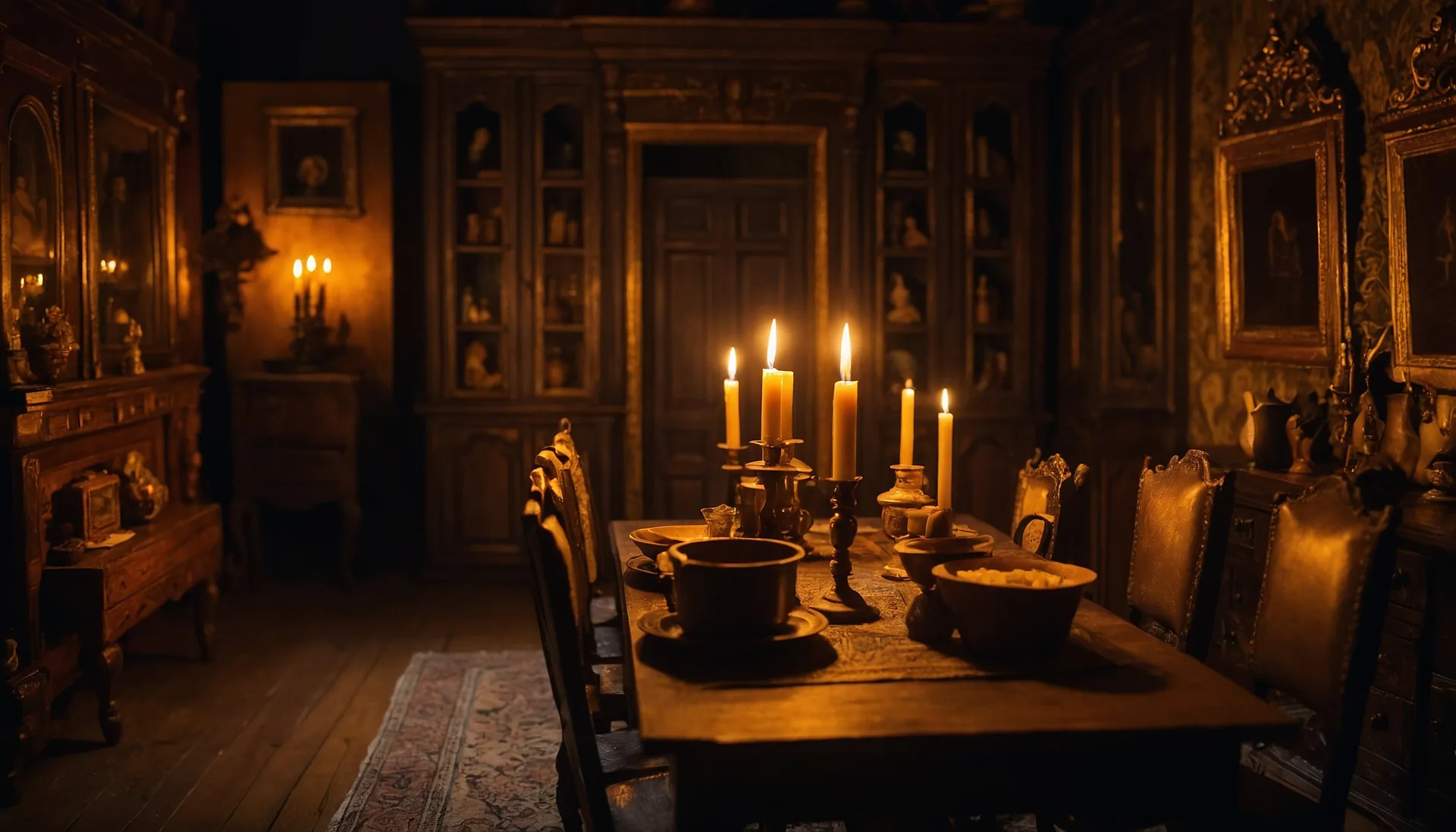
The story begins in the German city of Nuremberg in the early 1600s. Wealthy German merchants commissioned elaborate miniature houses not as children’s toys but as displays of domestic wealth, status, and managerial accomplishment. These “baby houses,” as they were known, were built by the finest craftsmen of the day and furnished with tiny replicas of every household item, from kitchen utensils to upholstered chairs.
The Nuremberg houses were cabinet-style constructions, essentially large wooden cabinets with rooms arranged behind doors. Each room was furnished in meticulous detail, and the furniture within was made by skilled artisans using the same techniques and materials as full-size furnishings. These were not crude approximations but precise miniature representations of contemporary domestic life.
The tradition quickly spread to the Netherlands, where the Dutch Golden Age produced some of the most spectacular miniature houses ever created. Wealthy Dutch women commissioned these elaborate displays as a reflection of their taste and household management skills. The Petronella Oortman house, dating to around 1686-1710 and now in the Rijksmuseum, is perhaps the most famous surviving example. Its furniture and accessories were made by specialized craftsmen, and the total cost of the house reportedly exceeded that of a full-size canal house.
The English Tradition: Baby Houses to Dolls’ Houses
In England, the miniature house tradition evolved somewhat differently. English “baby houses” of the 1700s were often architectural models of actual homes, and their furniture reflected the fashionable styles of the period. Georgian and Regency era baby houses survive in several English country houses and museums, offering invaluable insight into domestic furnishing of those periods.
The terminology shifted from “baby house” to “dolls’ house” during the Victorian era, and with that shift came a change in purpose. Where earlier miniature houses had been adult status symbols, Victorian dolls’ houses became increasingly associated with children’s play and education. However, fine craftsmen continued to produce exquisite miniature furniture for adult collectors alongside the simpler pieces made for children.
Queen Mary’s Dolls’ House
The most celebrated miniature house in history is arguably Queen Mary’s Dolls’ House, designed by the architect Sir Edwin Lutyens and completed in 1924. This extraordinary creation stands over five feet tall and contains miniature furniture, art, books, and functional systems that represent the absolute pinnacle of miniature craftsmanship.
The furniture in Queen Mary’s Dolls’ House was made by leading craftsmen and manufacturers of the day. Every piece was built to exacting 1/12 scale with fully functioning details. The house includes tiny books written by famous authors, miniature paintings by Royal Academicians, and working electrical and plumbing systems. It remains on permanent display at Windsor Castle and continues to inspire miniaturists worldwide.
The Victorian Explosion
The Victorian era was a golden age for miniature furniture production. Industrial advances made materials more accessible, and the growing middle class created demand for both children’s dolls’ houses and adult miniature collections. German manufacturers, particularly in the Thuringia region, became major producers of miniature furniture, exporting vast quantities to Britain, America, and beyond.
Victorian-era miniature furniture ranged from mass-produced pieces stamped from tin or turned from softwood to exquisite handmade pieces by individual craftsmen. The finest Victorian miniatures featured upholstered furniture with real fabric, turned and carved wooden pieces in period styles, and complete room settings with coordinated accessories.
This period also saw the emergence of miniature furniture as a collector’s category in its own right, distinct from dolls’ house furnishing. Wealthy collectors began assembling collections of fine miniature furniture much as they might collect porcelain, silver, or paintings.
The American Guild Movement
The story of miniature furniture in America took a distinctive turn in the mid-twentieth century with the emergence of organized guilds and clubs dedicated to the craft. The National Association of Miniature Enthusiasts (NAME), founded in 1972, became the largest organization of miniaturists in the world and played a crucial role in elevating standards of craftsmanship and collecting.
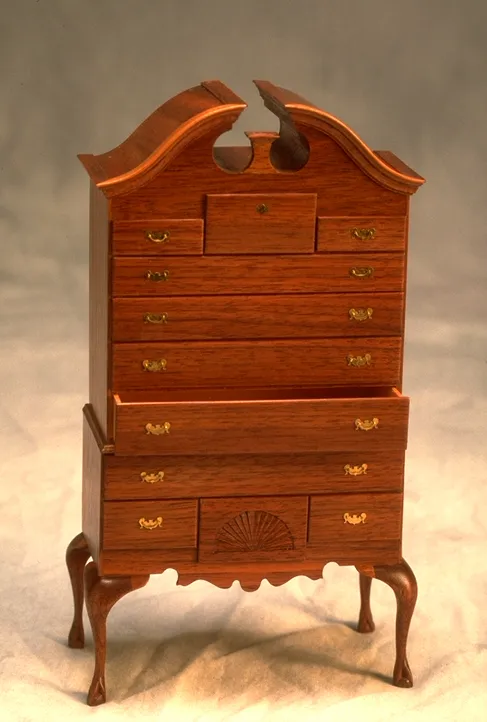
American makers of the late twentieth century pushed miniature furniture to new heights of technical achievement. Working independently in small workshops, these artisans developed techniques for creating museum-quality reproductions of American period furniture at 1/12 scale. Pieces by established American makers are now highly sought by collectors and held in institutional collections.
The guild movement also fostered education, with workshops, seminars, and publications that disseminated knowledge about techniques, materials, and historical furniture styles. This educational infrastructure helped develop both makers and collectors, creating a community of informed enthusiasts who drove quality ever higher. I discuss the major shows and events this community has produced in my guide to miniature furniture exhibitions and shows.
The Modern Artisan Renaissance
Today, miniature furniture making is experiencing what many call a renaissance. A new generation of makers is entering the craft, drawn by the challenge of extreme precision and the satisfaction of creating beautiful objects entirely by hand. At the same time, established makers continue to produce work of extraordinary quality, building on decades of accumulated skill and knowledge.
Several factors are driving this renaissance. Social media platforms have given miniature makers unprecedented visibility, allowing them to share their work with global audiences. YouTube and Instagram have become important channels for both showcasing finished pieces and documenting the making process, inspiring new makers and educating collectors. I explore these dynamics in my post on the renaissance of handcrafted miniatures in the digital age.
The broader cultural trend toward valuing handcraft and authenticity has also benefited miniature furniture. In a world increasingly dominated by mass production and digital experience, the appeal of a tiny piece of furniture made entirely by hand from solid hardwood is powerful and enduring.
Famous Collections Around the World
Several institutional collections offer outstanding examples of miniature furniture for anyone wanting to study the craft’s history.
The Smithsonian Institution in Washington, D.C. holds significant collections of American miniature furniture, including works by many of the most celebrated twentieth-century makers. The Art Institute of Chicago features the Thorne Miniature Rooms, a series of sixty-eight exquisite room settings created by Narcissa Niblack Thorne between 1932 and 1940. These rooms, furnished with meticulously crafted miniature furniture, chronicle European and American interior design from the late thirteenth century to the 1930s.
The Victoria and Albert Museum in London holds important examples of historical miniature furniture, particularly from the seventeenth and eighteenth centuries. The Rijksmuseum in Amsterdam houses several Dutch Golden Age miniature houses with their original furnishings. And the Miniature Museum of Taiwan contains one of the largest collections of contemporary miniature work in Asia.
What History Teaches Us
Looking back over four centuries of miniature furniture making, several themes emerge. The craft has always attracted the most skilled and patient artisans. It has always been valued by discerning collectors who appreciate the extraordinary difficulty of working at small scale. And it has proven remarkably resilient, surviving technological change, shifting tastes, and economic upheaval.
As a maker working in this tradition today, I feel a deep connection to the craftsmen who furnished the Nuremberg houses, who built furniture for Queen Mary’s Dolls’ House, and who established the American guild movement. We share the same commitment to precision, quality, and the belief that beautiful things are worth making well, no matter how small.
You can see my own contribution to this tradition in my gallery, and I welcome your questions and commissions through my contact page. The history of miniature furniture is still being written, and every new piece adds to the story.
Continue Your Journey
Related Articles
Handcrafted vs Kit-Built Miniatures: Key Differences
Compare handcrafted miniature furniture to kit-built pieces. Learn the key differences in materials, joinery, finishing, and collectibility between the two.
Miniature Furniture as Fine Art: The Case for Collecting
Explore why collectible miniature furniture belongs in the fine art world. From gallery exhibitions to museum collections, discover miniatures as true art.
Museum-Quality Miniatures: What Sets Them Apart
Discover what makes museum-quality miniature furniture different from hobby-grade pieces. Learn how collectors and curators evaluate fine artisan miniatures.