Shaker Style Miniatures: Simplicity in Small Scale
Learn why Shaker miniature furniture demands perfection. Expert guide to ladder-back chairs, pegboards, blanket chests, and wood selection for Shaker work.
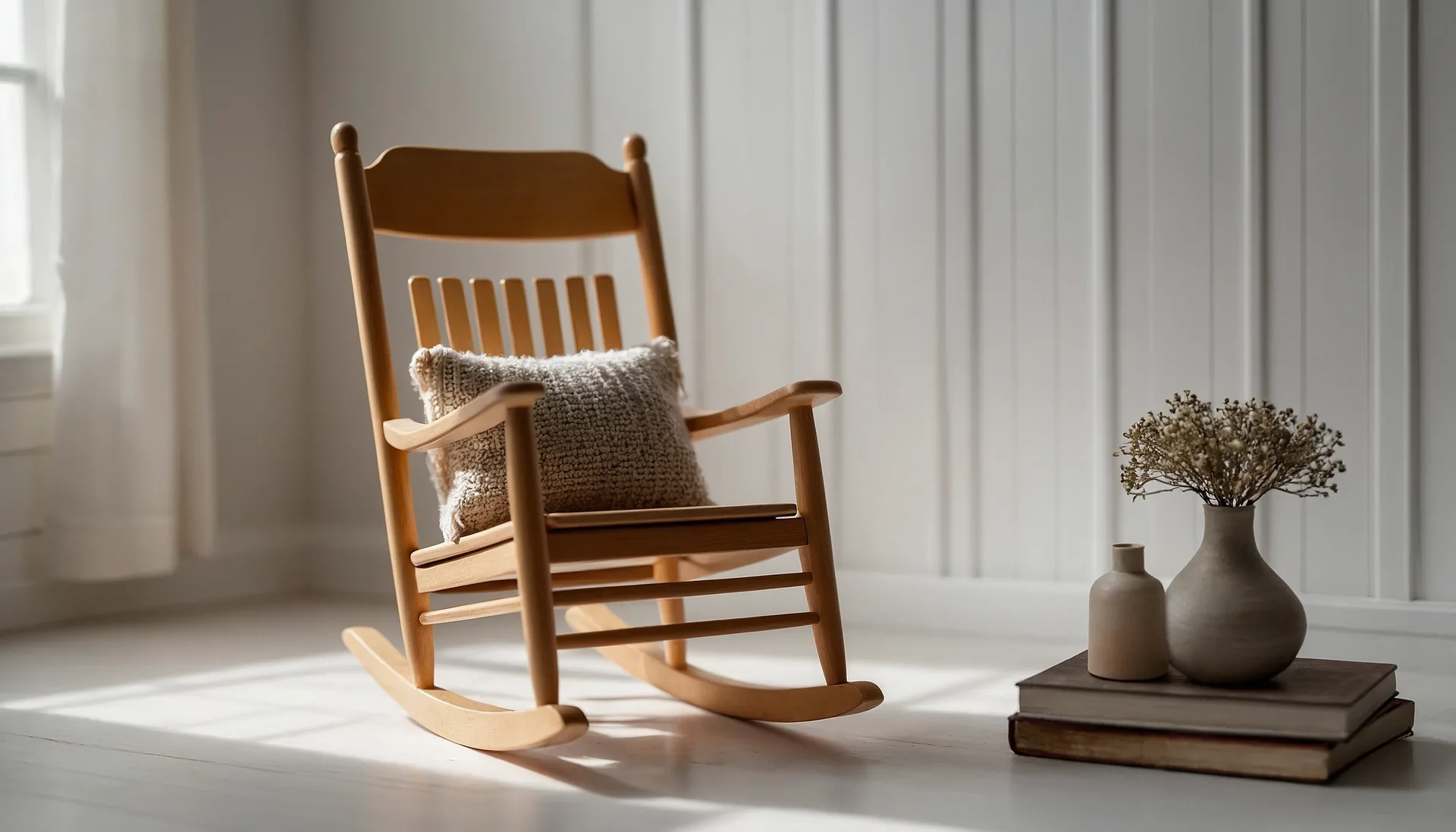
There is a paradox at the heart of Shaker furniture that every miniaturist eventually discovers: simplicity is the hardest style to get right. The Shakers, a religious community that flourished in America from the late eighteenth through the nineteenth century, believed that beauty resided in utility, honesty of materials, and perfection of workmanship. Their furniture has no carved ornament, no applied decoration, no inlay, and no unnecessary complexity. Every line is functional. Every surface is clean. And at 1/12 scale, that unadorned purity means there is absolutely nothing to distract the eye from any flaw in your work.
I have a deep respect for Shaker design, and building Shaker miniatures has taught me more about precision and restraint than any other style. In this article, I want to share the Shaker design philosophy, discuss the classic pieces that define the tradition, and explain why simplicity demands a particular kind of discipline from the miniature maker.
The Shaker Design Philosophy
The Shakers, formally the United Society of Believers in Christ’s Second Appearing, established communal settlements across New England and the Midwest beginning in the 1770s. Their religious beliefs directly shaped their approach to craft. They held that work was a form of worship, that unnecessary ornamentation was a distraction from spiritual purity, and that every object should be made as well as humanly possible.
These beliefs produced furniture of remarkable clarity. Shaker pieces are characterized by clean lines, light proportions, careful joinery, and a relationship between form and function that feels startlingly modern. The Shakers anticipated the design principles of the twentieth-century modernists by more than a hundred years. When Mies van der Rohe declared that less is more, the Shakers had been living that principle for generations.
For the miniaturist, this philosophy translates into a relentless focus on fundamentals. When you build a Shaker piece, you cannot rely on decoration to carry the design. The piece succeeds or fails based entirely on proportion, fit, finish, and the quality of the wood itself.
Why Simplicity Is Harder at Small Scale
In more ornate styles, small imperfections can be absorbed into the overall visual complexity. A slightly uneven surface on a Victorian sideboard is masked by applied moldings and carved ornament. A joint that is not quite perfect on a Chippendale piece disappears beneath the carved detail.
Shaker furniture offers no such cover. A tabletop must be perfectly flat. A leg must be perfectly straight, or perfectly tapered, with no wavering. A drawer front must sit flush with the case on all four sides with even reveals. The color and grain of the wood must be consistent and clean. Any imperfection, however minor, is on full display.
This is not meant to discourage anyone from building Shaker miniatures. Rather, I want to set honest expectations. Shaker work demands patience, sharp tools, and a willingness to remake parts that are not quite right. The reward is a piece of extraordinary quiet beauty that demonstrates genuine mastery of the craft.
Classic Shaker Pieces for Miniature Work
Ladder-Back Chairs
The Shaker ladder-back chair is one of the most iconic pieces of American furniture. It features turned posts and stretchers, flat slat-back rails that curve gently to fit the sitter’s back, and a woven seat of cloth tape or splint. The proportions are light and vertical, and the overall impression is one of airy grace.
At 1/12 scale, building a Shaker ladder-back chair is a challenging exercise in turning and assembly. Each post is turned on the lathe from a blank roughly 1/8 to 5/32 inch in diameter. The turned profile is simple compared to Chippendale or Federal work, but it must be consistent across all four posts. The slats are thin, flexible pieces shaped to a slight curve. I steam-bend or soak them to achieve the curve, then let them dry in a form.
The stretchers, thin turned rungs that connect the posts, are critical to the chair’s structural integrity at any scale. I drill tiny holes in the posts at precise locations and fit the stretcher tenons into them. The angles and spacing must be accurate or the chair will rack and wobble.
For the woven tape seat, I use narrow strips of silk ribbon or cotton tape in one or two colors, woven in a checkerboard pattern. This is delicate handwork that requires patience and a systematic approach to keep the tension even and the pattern clean.
Pegboards
The Shaker pegboard rail, or peg rail, is one of the most recognizable Shaker innovations. A simple board mounted at chair-rail height around the walls of a room, fitted with regularly spaced wooden pegs, it served as a universal storage system. Chairs, cloaks, hats, tools, and even clocks were hung from these pegs, keeping the floor clear and the room orderly.
At 1/12 scale, a pegboard is a satisfying project that requires careful drilling and turning. The board itself is a simple strip of hardwood about 1/8 to 5/32 inch wide. The pegs are tiny turned pieces, roughly 3/16 to 9/32 inch long, fitted into evenly spaced holes drilled along the board. I turn the pegs in batches on the lathe, aiming for consistency in diameter and shape. The round tenon at the base of each peg is sized to fit snugly into the drilled holes.
A pegboard is also a wonderful accessory for a Shaker-themed dollhouse room. With miniature chairs, bonnets, and tools hung from the pegs, it immediately establishes the Shaker character of the space.
Blanket Chests
The Shaker blanket chest is a simple, functional box with a hinged lid, often raised on short bracket feet or a simple base frame. The beauty of the piece comes from the proportions of the box, the quality of the wood, and the precision of the construction. Some examples feature a small row of drawers beneath the main chest compartment.
At 1/12 scale, I build blanket chests from thin hardwood stock, joining the corners with tiny dovetails. The lid is attached with miniature brass hinges or with pin hinges made from brass wire. The bracket feet are cut from slightly thicker stock and shaped with a jeweler’s saw.
Wood selection is particularly important for a blanket chest because the flat surfaces display the grain prominently. I choose pieces with straight, even grain and a warm color. Cherry and maple are both historically appropriate and visually appealing at miniature scale.
Trestle Tables
The Shaker trestle table is a deceptively simple form. A long, flat top sits on trestle supports connected by a central stretcher. The design is ancient, but the Shakers refined it to an essential purity. The proportions, the gentle curve of the trestle feet, and the clean edge profile of the top all matter enormously.
At 1/12 scale, the trestle supports are cut from thin hardwood and shaped with a jeweler’s saw and files. The stretcher connects them with through-tenon joints, which can be a pin mortise at this scale. The top is a flat panel of selected wood, finished to a smooth, even surface. Any warping, cupping, or twist in the top is immediately obvious and unacceptable.
Cupboards and Built-In Storage
The Shakers were masters of built-in storage. Their meetinghouses and dwelling houses featured extensive cupboards, drawers, and shelving fitted into the architecture. These pieces are characterized by flat-panel doors with simple frames, turned wooden pulls, and a sense of orderly repetition.
For a miniature Shaker room, built-in cupboards are a defining element. I build them as self-contained units that can be set against a wall. The doors are simple frames with flat panels, and the pulls are tiny turned mushroom knobs. The overall effect is one of clean, organized calm that is unique to Shaker spaces.
Wood Selection for Shaker Miniatures
The Shakers used locally available woods, primarily pine, maple, cherry, birch, and butternut. Each wood was chosen for its fitness for the purpose. Pine for case goods and built-ins, maple and birch for chairs and turned pieces, cherry for fine furniture.
For miniature work, I select woods based on their grain characteristics at 1/12 scale.
Cherry is my most-used wood for Shaker miniatures. It has a fine, even grain that looks beautiful at small scale, it carves and machines cleanly, and it develops a warm reddish-brown patina over time. Most of my Shaker tables, chests, and finer case pieces are built from cherry.
Maple works well for chairs and turned pieces. Its light color and tight grain are appropriate for the style, and it turns cleanly on the lathe. Hard maple is preferable to soft maple for miniature work because it holds finer detail.
Pine or basswood serves for simpler pieces and the interior components of case furniture. At 1/12 scale, the relatively coarse grain of pine can be an issue, so I select pieces with the straightest, tightest grain I can find. Basswood, while not historically used by the Shakers, is a reasonable substitute that machines more predictably at small scale.
I discuss wood selection more broadly in my guide to choosing wood for miniature furniture.
Finishing Shaker Miniatures
Shaker furniture was finished simply. Clear finishes that allowed the natural wood to show were most common. Some pieces were painted in characteristic colors: a deep Shaker red, a warm yellow, or a blue-green. These painted finishes were typically milk paint, which has a distinctive flat, chalky appearance.
For clear-finished Shaker miniatures, I use thin coats of shellac or a hand-rubbed oil finish. The finish should be smooth and warm without being glossy. A satin sheen is appropriate. I apply multiple thin coats, rubbing each one gently with fine steel wool.
For painted Shaker pieces, I use acrylic paint thinned to a consistency that allows the grain to show through slightly, simulating the semi-transparent quality of milk paint. Two or three thin coats, lightly sanded between applications, produce a convincing effect. The colors should be warm and slightly muted, avoiding the bright, saturated hues of modern paint.
The Reward of Restraint
Building Shaker miniatures has made me a better maker across all styles. The discipline of working without decorative complexity, the focus on perfect proportions and flawless surfaces, and the intimate relationship with the wood itself all sharpen skills that transfer to every other project. When I return to more ornate styles like Chippendale or Victorian after a period of Shaker work, I find that my eye is sharper and my standards higher.
If you are interested in Shaker miniatures, whether to build or collect, I encourage you to explore this tradition deeply. Visit my gallery to see examples, and feel free to reach out through my contact page with questions. The quiet beauty of Shaker furniture, at any scale, is something genuinely special.