
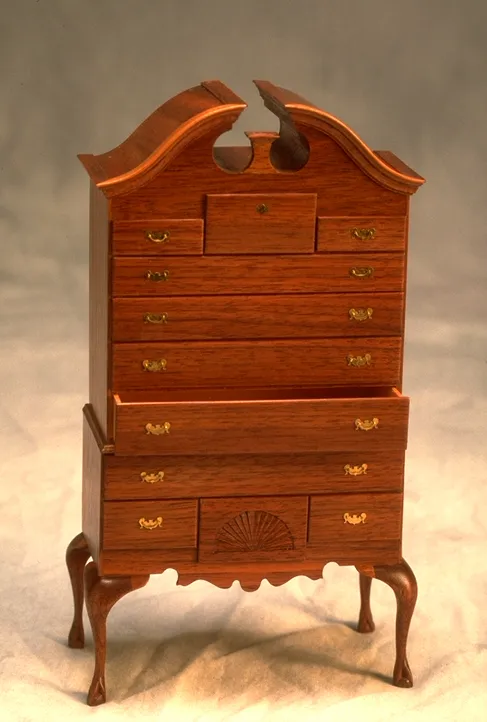
Victorian Dollhouse Furniture: Styles and Techniques
Complete guide to Victorian dollhouse furniture styles including Gothic Revival, Eastlake, and Renaissance Revival. Learn materials and building techniques.
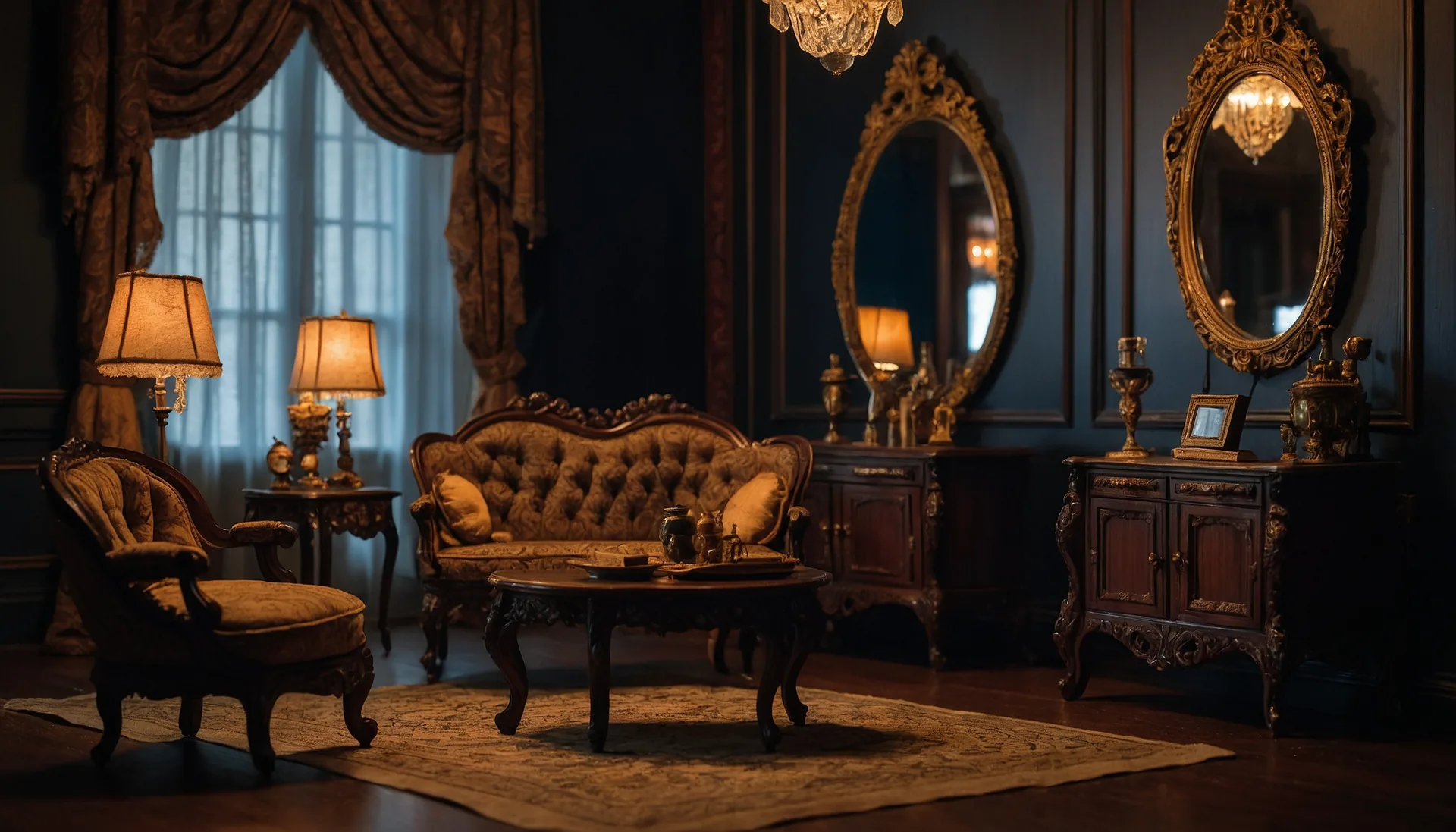
The Victorian era, spanning roughly from the 1830s to 1900, produced some of the most diverse and exuberant furniture in Western history. For dollhouse collectors and miniature makers, Victorian furniture holds a particular fascination. Its bold forms, rich materials, elaborate decoration, and sheer variety offer endless possibilities for building and collecting. A Victorian dollhouse room can be opulent, cozy, dramatic, or scholarly depending on which sub-style you choose to represent.
In this guide, I want to walk through the major Victorian furniture styles, discuss the materials and techniques that define them, and share my approach to reproducing these pieces at 1/12 scale.
Understanding Victorian Sub-Styles
One of the things that makes Victorian furniture so interesting, and so challenging to discuss, is that it is not a single style. The Victorian era encompassed multiple design movements that sometimes overlapped and sometimes competed. Understanding these sub-styles is essential for building or collecting miniatures that are historically coherent.
Gothic Revival (1840s-1880s)
Gothic Revival furniture drew inspiration from medieval architecture. Pointed arches, trefoil and quatrefoil piercings, clustered columns, and tracery patterns characterize the style. The leading designer was Augustus Welby Northmore Pugin, whose work for the Houses of Parliament established the visual vocabulary. In America, Alexander Jackson Davis designed Gothic Revival furniture for his architectural commissions.
At 1/12 scale, Gothic Revival pieces are distinctive and dramatic. The pointed arches and tracery patterns require careful piercing work with a jeweler’s saw, similar to the techniques I use for Chippendale splats but with different motifs. I particularly enjoy building Gothic Revival bookcases with their pointed arch door panels and carved cresting.
Renaissance Revival (1860s-1880s)
Renaissance Revival furniture is massive, heavily carved, and imposing. It features architectural elements like pediments, columns, cartouches, medallions, and figural carvings. Walnut was the dominant wood, often combined with burl veneer panels and applied gilt ornament.
This style is one of the more challenging to reproduce in miniature because so much of its character comes from carved ornament. At 1/12 scale, I simplify the carving while retaining the key visual elements. Medallions and cartouches can be carved from small pieces of boxwood and applied to the surface. Turned and carved columns flank the doors and drawers. The overall forms tend to be rectilinear and massive, which actually makes the case construction somewhat simpler than more curvaceous styles.
Eastlake (1870s-1890s)
Charles Locke Eastlake published “Hints on Household Taste” in 1868, advocating for furniture that was honest in its construction and restrained in its ornament. Paradoxically, the furniture sold under his name in America was often quite ornate, featuring incised line decoration, chip carving, turned spindles, and applied geometric ornament.
For the miniaturist, Eastlake furniture is appealing because the decoration is primarily geometric rather than figurative. Incised lines and chip carving at 1/12 scale are achievable with a sharp V-gouge and patience. The turned spindle galleries that appear on many Eastlake pieces, particularly sideboards and desks, are turned on the lathe from tiny blanks and installed in rows. This repetitive turning work builds skill quickly.
Rococo Revival (1840s-1870s)
Also called Louis XV Revival, this sub-style features sinuous curves, carved flowers and fruit, cabriole legs, and tufted upholstery. The work of John Henry Belter, who developed a technique for laminating and bending rosewood into flowing shapes, epitomizes the style. Belter parlor suites with their carved grape and rose motifs are among the most recognizable pieces of American Victorian furniture.
Reproducing Belter-style furniture in miniature is challenging because the forms are so organic. The chairs and sofas feature carved cresting rails that sweep and flow like natural forms. I carve these from solid wood rather than attempting to laminate at miniature scale. The tufted upholstery on seating pieces requires careful fabric work, using silk or very fine cotton pulled through tiny holes and secured with miniature buttons or knots.
Aesthetic Movement (1870s-1890s)
The Aesthetic Movement emphasized art for its own sake and drew on Japanese, Moorish, and classical influences. Furniture tends to be lighter and more geometric than other Victorian styles, with ebonized finishes, gilt details, and decorative panels featuring painted or inlaid designs of sunflowers, peacocks, and other natural motifs.
At miniature scale, Aesthetic Movement furniture is distinguished by its finish as much as its form. Ebonized finishes are achieved by dyeing light-colored wood with India ink or a commercial ebonizing solution, then building up a polished surface with shellac. Gilt details are applied with gold paint or tiny pieces of gold leaf.
Materials in Victorian Miniatures
Wood Choices
Victorian furniture used a wide range of woods. Walnut dominated the middle decades, rosewood appeared in the finest parlor pieces, oak became important later in the period, and mahogany persisted throughout. Burl veneers, both walnut and elm, were widely used for panel decoration.
For miniature work, I select woods based on their grain character at 1/12 scale. Cherry and pear substitute well for walnut and mahogany. For rosewood effects, I sometimes use real rosewood in thin sheets, or I stain a fine-grained wood to approximate the color. Burl effects can be simulated with carefully chosen pieces of natural burl veneer, cut very thin and applied to flat surfaces.
Upholstery and Textiles
Victorian furniture is heavily upholstered compared to earlier styles. Parlor chairs and sofas feature deep button tufting, heavy fringing, and rich fabrics like velvet, damask, and silk. At 1/12 scale, finding fabrics that look correct is crucial. I use fine silk velvet for the most luxurious pieces. It drapes and gathers naturally at small scale in a way that heavier fabrics cannot.
Button tufting is achieved by pulling thread through the miniature cushion or seat from back to front, drawing the fabric into dimples at regular intervals. Tiny beads or commercially available miniature buttons serve as the tufting points. Fringe and tassel trim is either purchased from miniature suppliers or made from embroidery thread, which I discuss more broadly in my complete guide to 1/12 scale furniture.
Marble and Metal
Victorian tables, washstands, and sideboards frequently feature marble tops. At 1/12 scale, I simulate marble using thin pieces of actual marble or by painting a realistic marble pattern on a smooth substrate like sealed basswood. The painting technique involves laying down a base color, then adding vein patterns with a fine brush using thinned paint.
Metal elements, including drawer pulls, escutcheons, casters, and applied ornament, are important to Victorian furniture’s character. I use commercially available miniature brass hardware for most applications and fabricate custom pieces from brass sheet and wire when needed.
Building Victorian Miniatures: Key Techniques
Case Construction
Victorian case furniture tends to be rectilinear with applied moldings, which makes the basic box construction straightforward. I build cases from hardwood sheet stock, joining corners with mitered or butt joints. The visual complexity comes from the applied elements: moldings, turnings, carvings, and veneered panels.
I shape moldings by hand using small planes and files, or by running thin stock past a shaped scraper. Crown moldings, base moldings, and panel moldings are cut to length and mitered at the corners before being glued in place.
Turned Elements
Victorian furniture makes extensive use of turned elements. Spindle galleries, split turnings applied as decoration, turned legs, and finials appear throughout the style. A miniature lathe is essential for this work. I turn dozens of small spindles for a single Eastlake sideboard, for example, and they must all match.
Split turnings, which are turnings sawed in half lengthwise and applied flat-side-down to a surface as decoration, are a distinctive Victorian technique. I turn a full spindle on the lathe, then saw it in half with a fine-bladed saw, sand the flat face smooth, and glue it to the case.
Applied Ornament
Victorian furniture is heavily ornamented with applied carved elements, moldings, and sometimes cast or stamped metal fittings. At 1/12 scale, I carve applied ornaments like medallions, flowers, and scrolls from boxwood or pear, then glue them in position on the piece. This approach allows me to carve each element independently, which is easier than trying to carve directly on an assembled piece.
Popular Victorian Pieces for Collectors
Certain Victorian furniture forms are particularly popular with dollhouse collectors. The Victorian parlor set, consisting of a sofa, gentleman’s chair, and lady’s chair, is a perennial favorite. Bedroom suites with tall headboards, marble-topped dressers, and washstands are equally in demand. Sideboards and etageres showcase the Victorian love of display and make striking additions to a miniature dining room.
Other collectible pieces include the hall tree, the fainting couch or chaise longue, the secretary desk with carved cresting, and the piano. Each of these allows the miniaturist to explore different aspects of Victorian design and technique.
Finishing Victorian Miniatures
Victorian finishes varied from the deep, dark tones of walnut and rosewood to the lighter effects of golden oak later in the period. I typically use shellac as my primary finish, tinted to the appropriate tone with aniline dye. For ebonized pieces, I apply India ink to raw wood until the desired depth is achieved, then seal with clear shellac.
The key to a convincing Victorian finish is depth. These pieces were originally finished to a high gloss with multiple coats of varnish or French polish. I build up thin layers of shellac, rubbing each coat with fine steel wool or a worn piece of 600-grit sandpaper, until the surface has a warm glow. The final coat is left as-is for a glossy piece or rubbed with rottenstone and oil for a softer satin finish.
Victoria in Miniature
Victorian dollhouse furniture rewards the maker and collector with its extraordinary variety and visual richness. Whether your taste runs to the drama of Gothic Revival, the grandeur of Renaissance Revival, the charm of Eastlake, or the elegance of the Aesthetic Movement, there is a Victorian style that speaks to you.
Explore examples of my Victorian and other period miniatures in the gallery, and feel free to contact me with questions about building or commissioning Victorian pieces. I am particularly fond of this era and always enjoy discussing its furniture traditions with fellow enthusiasts.
Continue Your Journey
Related Articles
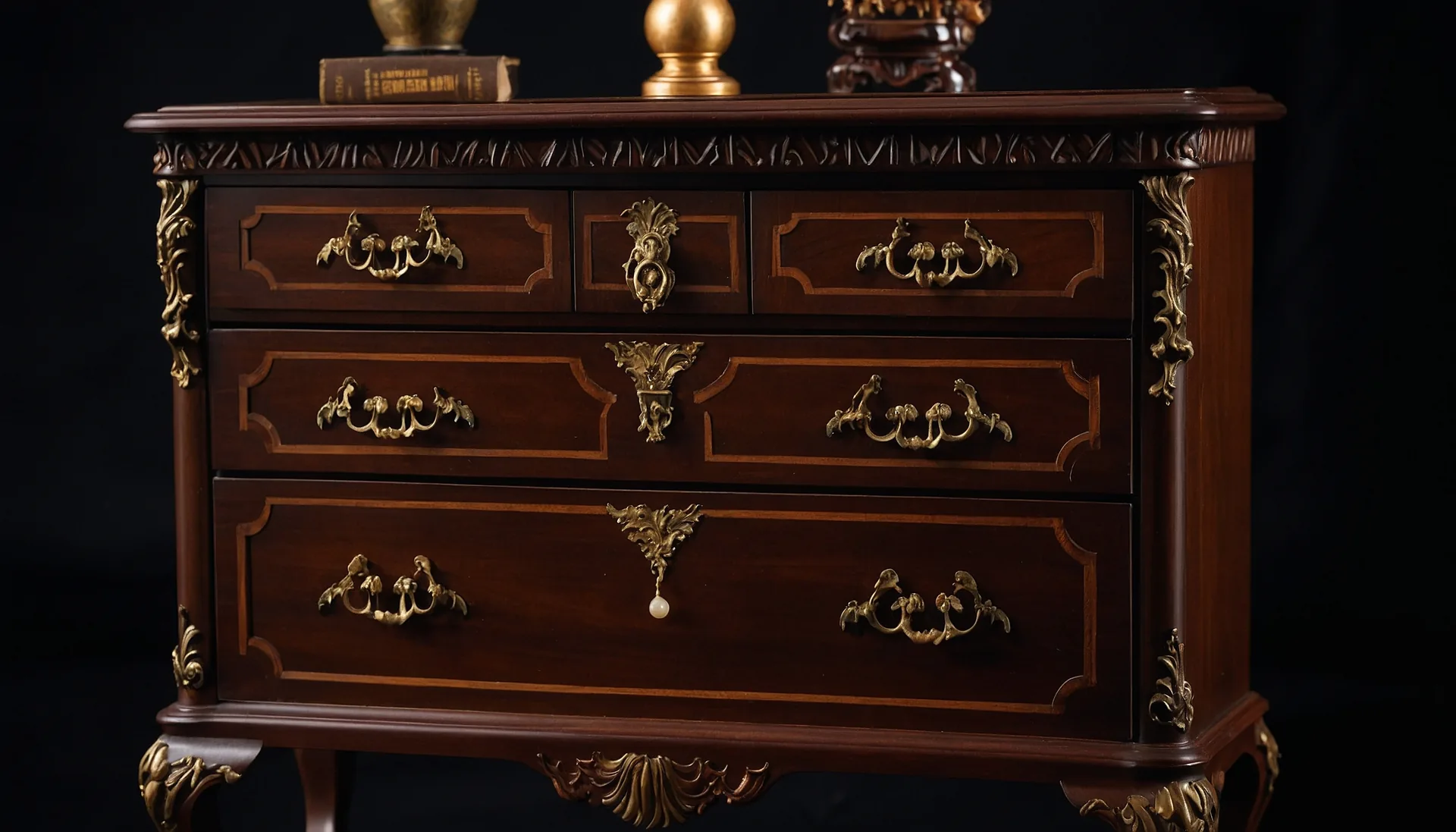
Chippendale Miniature Furniture: 1/12 Scale Guide
Master Chippendale miniature furniture with expert techniques for ball and claw feet, ribbon-back chairs, and ornate carvings at dollhouse scale.
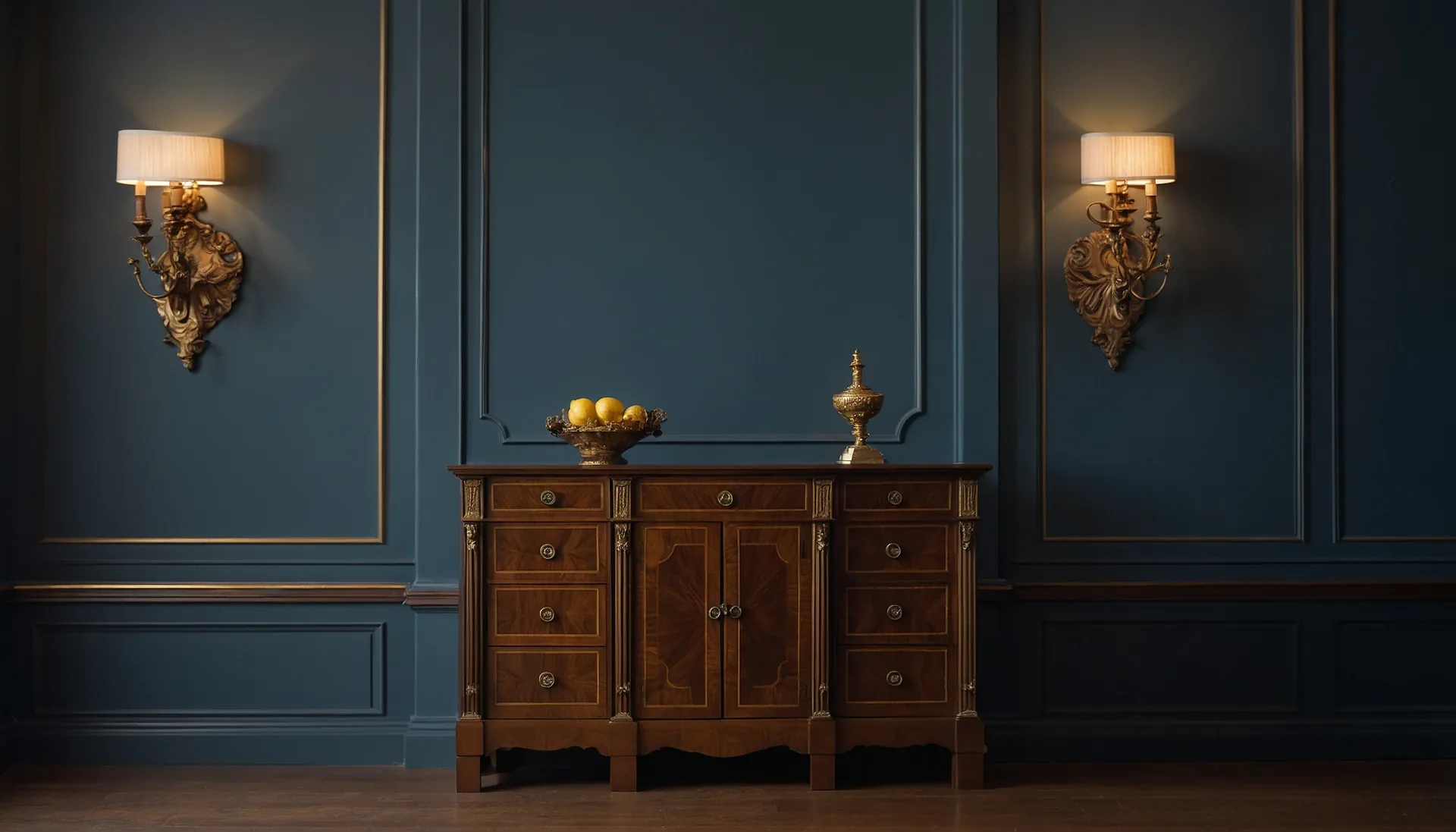
Federal Period Miniature Furniture: Elegance at 1/12 Scale
Master Federal period miniature furniture with Hepplewhite and Sheraton techniques. Learn stringing, banding, tapered legs, and inlay work at 1/12 scale.
The Art of the Miniature Highboy: A Maker's Guide
Complete maker's guide to building a miniature highboy at 1/12 scale. Learn leg turning, drawer construction, and broken pediment techniques step by step.