
Chippendale Miniature Furniture: 1/12 Scale Guide
Master Chippendale miniature furniture with expert techniques for ball and claw feet, ribbon-back chairs, and ornate carvings at dollhouse scale.
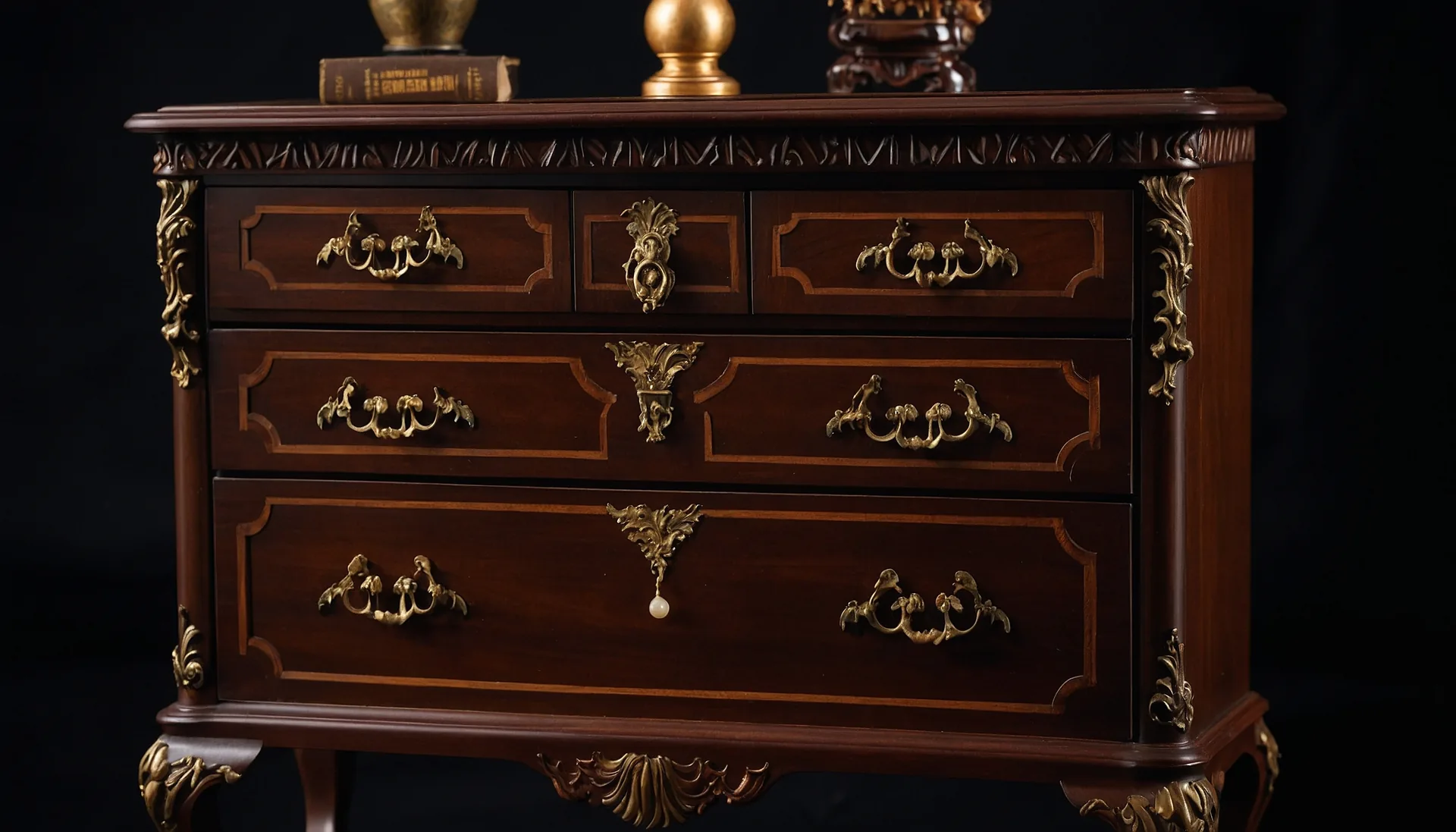
Thomas Chippendale published “The Gentleman and Cabinet-Maker’s Director” in 1754, and the furniture world has never been the same. His designs blended English, French, Chinese, and Gothic influences into a style of extraordinary richness and complexity. For miniaturists working in 1/12 scale, Chippendale furniture represents one of the most demanding and satisfying challenges in the craft. Every piece bristles with carved detail, from ball-and-claw feet to pierced splats, shell motifs to acanthus leaves.
I have spent years developing techniques for reproducing Chippendale details at miniature scale, and in this article I want to share what I have learned about the style, its signature features, and the practical methods that make these pieces possible.
Understanding the Chippendale Style
Chippendale furniture emerged in the mid-eighteenth century as an evolution of the Queen Anne style that preceded it. Where Queen Anne relied on smooth curves and restrained decoration, Chippendale embraced complexity. The cabriole leg remained, but it gained carved knees, acanthus leaves, and the iconic ball-and-claw foot. Chair backs evolved from solid vase splats to elaborate pierced designs. Case furniture acquired broken pediments, flame finials, and carved rosettes.
The style is typically divided into three sub-categories. Chippendale Rococo features flowing, asymmetrical carved ornament inspired by French design. Chippendale Gothic incorporates pointed arches and tracery patterns. Chippendale Chinese draws on pagoda forms, fretwork, and lattice patterns. American makers, particularly those in Philadelphia, developed their own interpretation that combined Rococo carving with bold proportions and powerful visual presence.
Signature Features and How to Reproduce Them
Ball-and-Claw Feet
The ball-and-claw foot is probably the most recognized element of Chippendale furniture. It depicts a talon, often interpreted as an eagle’s claw or dragon’s claw, gripping a round ball. At full scale, carving one requires significant skill. At 1/12 scale, it becomes an exercise in controlled precision that pushes the limits of what hand tools can achieve.
My process begins with shaping the cabriole leg as I would for a Queen Anne piece. Once the ankle area is established, I mark the four talons on the end grain, spacing them evenly around the circumference. Using a fine V-gouge and a sharp craft knife, I separate the talons by carving narrow channels between them. The ball is formed by carefully rounding the wood between the talons, and each talon is then shaped to wrap around the ball.
The most common mistake I see in miniature ball-and-claw feet is making the talons too thick. At this scale, they need to be almost impossibly thin to read correctly. I often refine them with a fine needle file and finish with 400-grit sandpaper folded into a point. The entire foot, once completed, is roughly 3/16 inch in diameter. Boxwood is my preferred material for this work because its dense, uniform grain holds the fine details without crumbling.
Pierced Chair Splats
Chippendale chairs feature backs with elaborate pierced designs. The ribbon-back chair, with its splat carved to resemble interlacing ribbons, is among the most famous furniture forms ever designed. Other splats incorporate Gothic tracery, interlocking scrolls, or naturalistic foliage.
Reproducing these at 1/12 scale requires a different approach than full-scale work. I begin by reducing the design to its essential visual elements. A full-size ribbon-back splat might have dozens of individual piercings and carved surfaces. At miniature scale, I typically simplify to capture the overall gesture while retaining enough detail to identify the pattern.
I cut the splat profile from thin stock, around 1/32 to 1/16 inch thick, using a jeweler’s saw with a 2/0 or 3/0 blade. For the piercings, I drill tiny holes to establish each opening, then thread the saw blade through to cut the interior shapes. Afterward, I refine the edges with needle files and micro gouges. This is slow, painstaking work. A single splat might take me two or three hours to complete, and I usually make several before I get one I am satisfied with.
Carved Shell Motifs
While the Queen Anne style introduced the shell as a decorative element, Chippendale makers elevated it to new heights. Chippendale shells are often more deeply carved, more detailed, and more three-dimensional than their Queen Anne predecessors. They appear on the knees of cabriole legs, on drawer fronts, on mirror frames, and on the crest rails of chairs.
At miniature scale, I carve shells with a combination of flat and sweep micro gouges. I start by establishing the overall convex or concave profile, then carefully lay in the radiating ribs. The technique I find most effective is to carve from the center outward, using a rocking motion with a very sharp gouge to create each lobe. The edges of the shell are then undercut slightly to lift the carving off the surface and create shadows that enhance the visual depth.
Broken Pediments and Finials
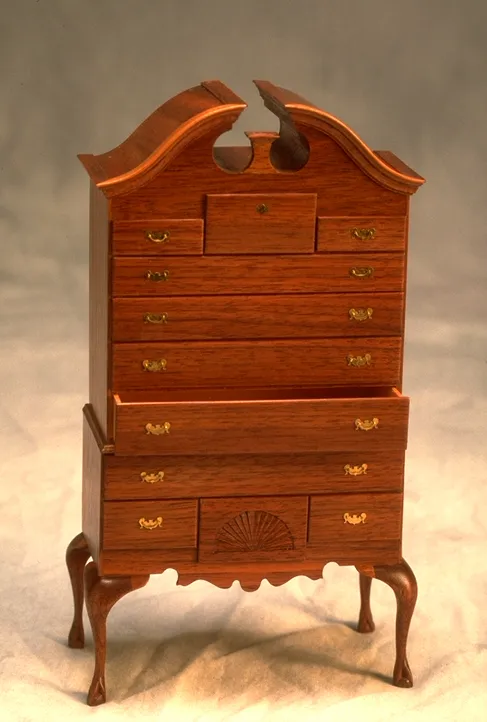
The bonnet top or broken pediment is a hallmark of Chippendale case furniture, particularly highboys and secretary desks. It consists of two scrolled molding profiles that sweep upward from either side of the case, ending in carved rosettes, with a central finial, often a flame or urn shape, rising from a plinth between them.
Building a miniature broken pediment requires careful layout and steady hands. I shape each scroll from a solid piece of fine-grained wood, cutting the profile with a jeweler’s saw and refining the curves with files. The molding profile on the face of each scroll is carved in place with micro gouges. Rosettes are carved separately and applied. Finials are turned on my miniature lathe and then hand-carved to add flame or leaf details.
The Ornate Challenge: Why Chippendale Tests Your Limits
Chippendale furniture is, by its nature, heavily decorated. This creates a fundamental challenge for the miniaturist. Decoration that reads clearly at full scale can become muddled or lost at 1/12 scale. The trick is knowing what to include and what to suggest. I think of it as translating rather than literally scaling.
For example, a full-size Chippendale knee bracket might feature a complex arrangement of C-scrolls, acanthus leaves, and cross-hatching. At miniature scale, I might carve the overall sweep of the bracket and suggest the primary scroll forms while simplifying the secondary details. The eye fills in what it expects to see, and the piece reads as authentically Chippendale without requiring impossible levels of detail.
This kind of editorial judgment is something that develops with experience. If you are just beginning with Chippendale miniatures, I strongly recommend studying full-scale examples in person whenever possible. Museums, antique shops, and auction previews offer opportunities to examine the carving up close and understand how the forms are constructed. That understanding is what allows you to make smart decisions about simplification. My workshop page shows the kinds of references and resources I keep on hand.
Tools for Chippendale Miniature Work
Chippendale work demands a wider range of tools than simpler styles. Beyond the basics I discuss in my essential tools guide, you will need a good set of micro carving gouges in various sweeps, a selection of fine riffler files, and ideally a miniature lathe for turning finials and columns.
I also rely heavily on magnification. Much of my Chippendale carving is done under a magnifying lamp or headband magnifier. Working at 3x to 5x magnification makes a dramatic difference in the quality of fine carved detail.
Sharp tools are even more critical for Chippendale work than for simpler styles. At these scales, any tearing or crushing of wood fibers is immediately visible. I sharpen my micro gouges on fine ceramic stones and strop them on leather charged with chromium oxide compound before every carving session.
Chippendale Pieces for Miniature Collectors
For collectors, Chippendale miniatures represent some of the most impressive and valuable pieces available. A well-executed Chippendale highboy with carved shells, ball-and-claw feet, and a broken pediment top is a showcase piece for any dollhouse or collection. Philadelphia-style pieces, with their bold proportions and lavish carving, are particularly prized.
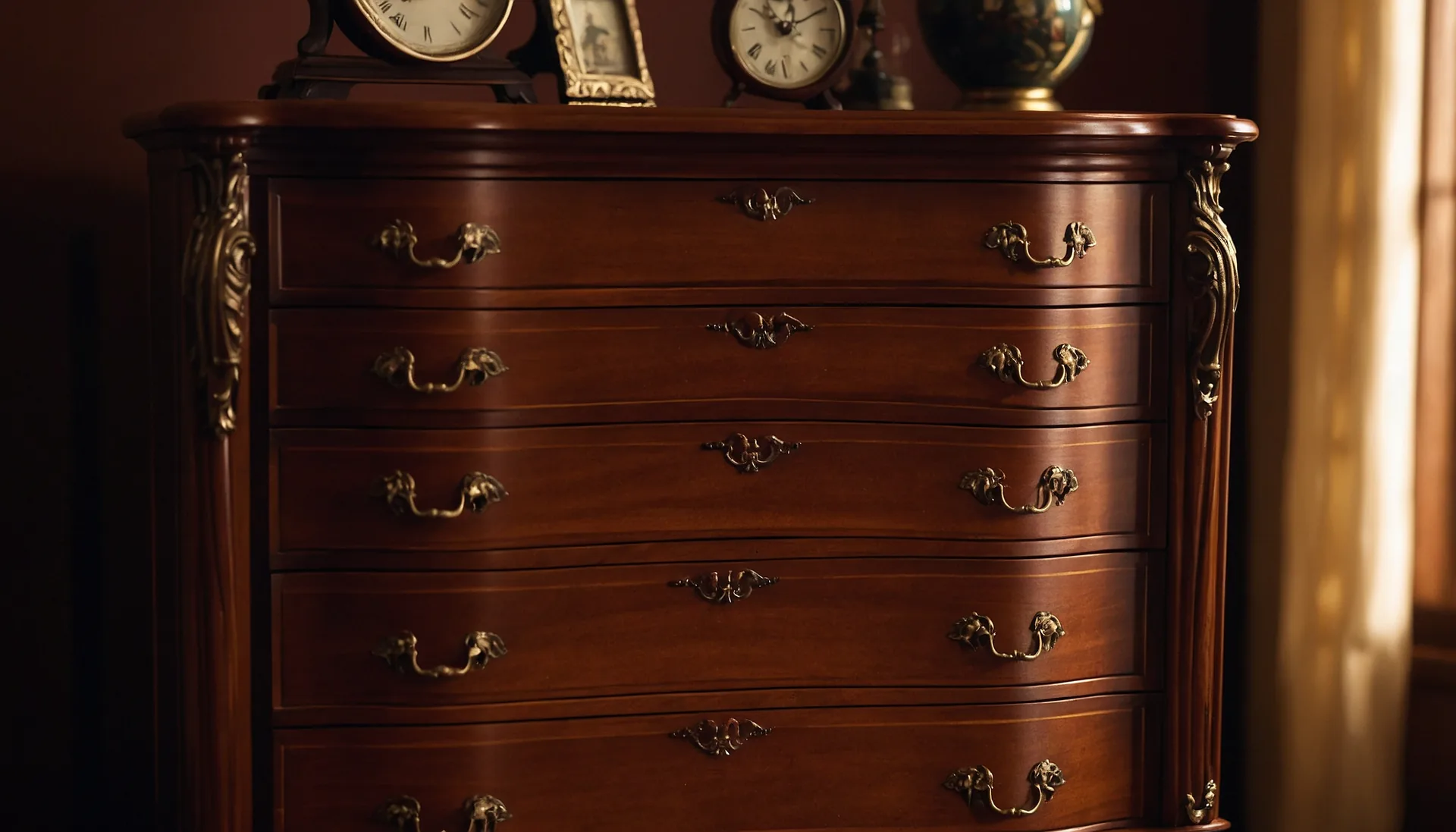
Other popular Chippendale forms include the ribbon-back side chair, the serpentine-front chest of drawers, the tea table with pie-crust edge, and the partner’s desk. Each of these offers opportunities for the maker to demonstrate virtuoso carving skills. If you are interested in seeing my Chippendale work, visit the gallery, or contact me to discuss a custom commission.
Chippendale in Context
Understanding Chippendale furniture in the context of the broader furniture timeline enriches both making and collecting. The style grew from Queen Anne, ran concurrent with some early Federal period work, and eventually gave way to the lighter, more refined neoclassical styles of Hepplewhite and Sheraton. Building pieces from across this timeline in miniature creates a collection that tells the story of design evolution, which I find endlessly fascinating.
The skills you develop working on Chippendale miniatures, particularly carving, complex joinery, and visual editing of detail, transfer directly to other ornate styles like Victorian and Renaissance Revival. In many ways, mastering Chippendale at 1/12 scale opens the door to every other challenge in the craft.
Continue Your Journey
Related Articles
Federal Period Miniature Furniture: Elegance at 1/12 Scale
Master Federal period miniature furniture with Hepplewhite and Sheraton techniques. Learn stringing, banding, tapered legs, and inlay work at 1/12 scale.
The John Goddard Block-Front Secretary Desk in Miniature
Explore the iconic John Goddard block-front secretary desk in miniature. Learn to reproduce shell carvings, block fronts, and pigeonholes at 1/12 scale.
The Art of the Miniature Highboy: A Maker's Guide
Complete maker's guide to building a miniature highboy at 1/12 scale. Learn leg turning, drawer construction, and broken pediment techniques step by step.